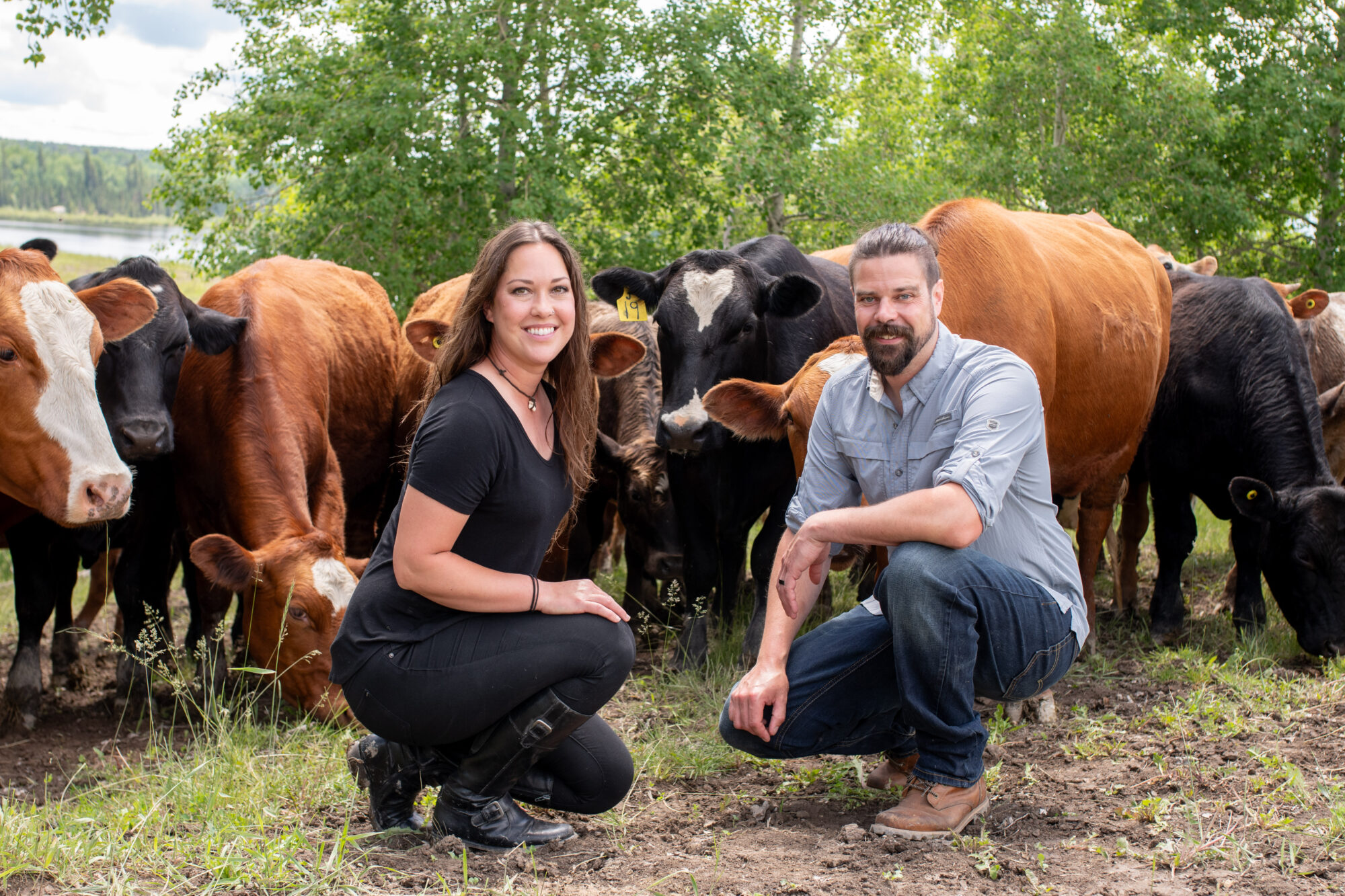
Black Barn Farms
104.5 acres acres271 Stephenson Rd, Oxdrift, Ontario, P0V2J0Phil & Sarah Lovenuk
Regen Ag means food security for future generations of humans and wildlife. It means acting as true stewards of the land and preserving the habitats of multiple species- not just the ones that we deem necessary for our own survival. It’s time farming gave back to nature, and this is how we do it.
Products
- Grass-Fed Fodder-Finished Beef
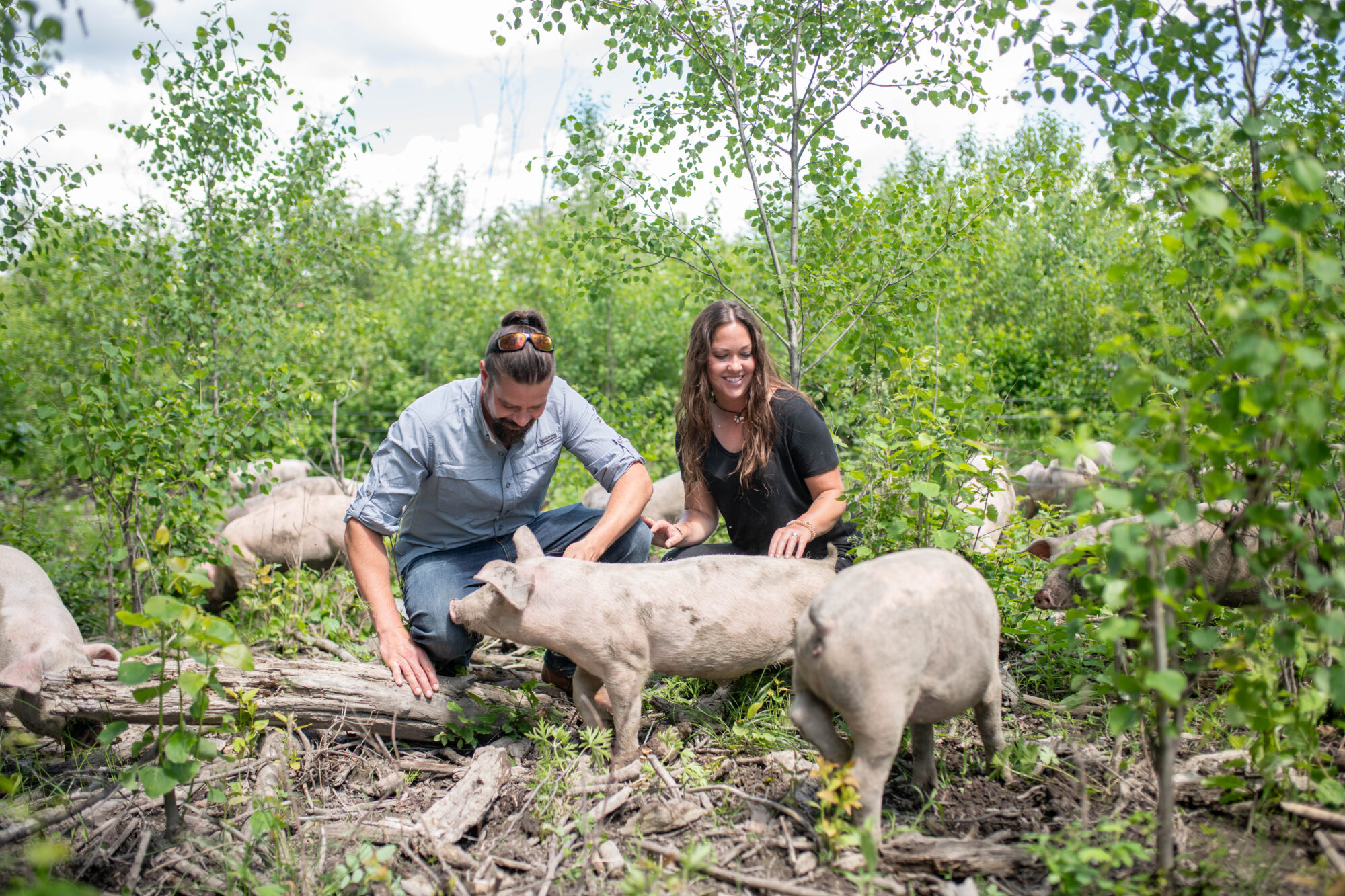
- Forest-Raised Pork
- Individual Cuts
- Yearly Bulk Orders
Regenerative Practices
- Minimize soil disturbance
- No-till (direct seeding, zero-tillage) The soil is not worked at any point throughout the season. residue from the previous crop is left on the soil surface, and its root system is left intact. the following crop is seeded directly into the soil without tillage.
- Permanent grassland A parcel of land composed primarily of herbaceous grasses, including perennials and native plant species, which can be used for grazing, forage, or biomass production.
- No-till (direct seeding, zero-tillage)
- Keep the soil covered and maintain living roots year-round
- Protect and enhance biodiversity
- Habitat conservation/creation/restoration The conservation, creation, and restoration of ecosystems to improve habitat value for wildlife. forests, prairies, riparian areas, or wetlands can be restored along farmland.
- Habitat conservation/creation/restoration
- Preserve and restore natural ecosystems
- Maintain living roots year-round (agroforestry and perennials)
- Silvopasture The planned and managed integration of livestock, trees, and forage in a farm system.
- Perennial crops (grasslands) Crops that regrow each year in a specific climate without needing to be reseeded.
- Windbreaks A single row or multiple rows of trees and shrubs to break the force of winds.
- Native perennial vegetation conservation The conservation of existing—or reintroduction of—native perennial vegetation, those that occur naturally in a region in which it evolved. it includes grasslands, woodlands, wetlands, and coastal habitats.
- Silvopasture
- Integrate animals on the lands and ensure their welfare
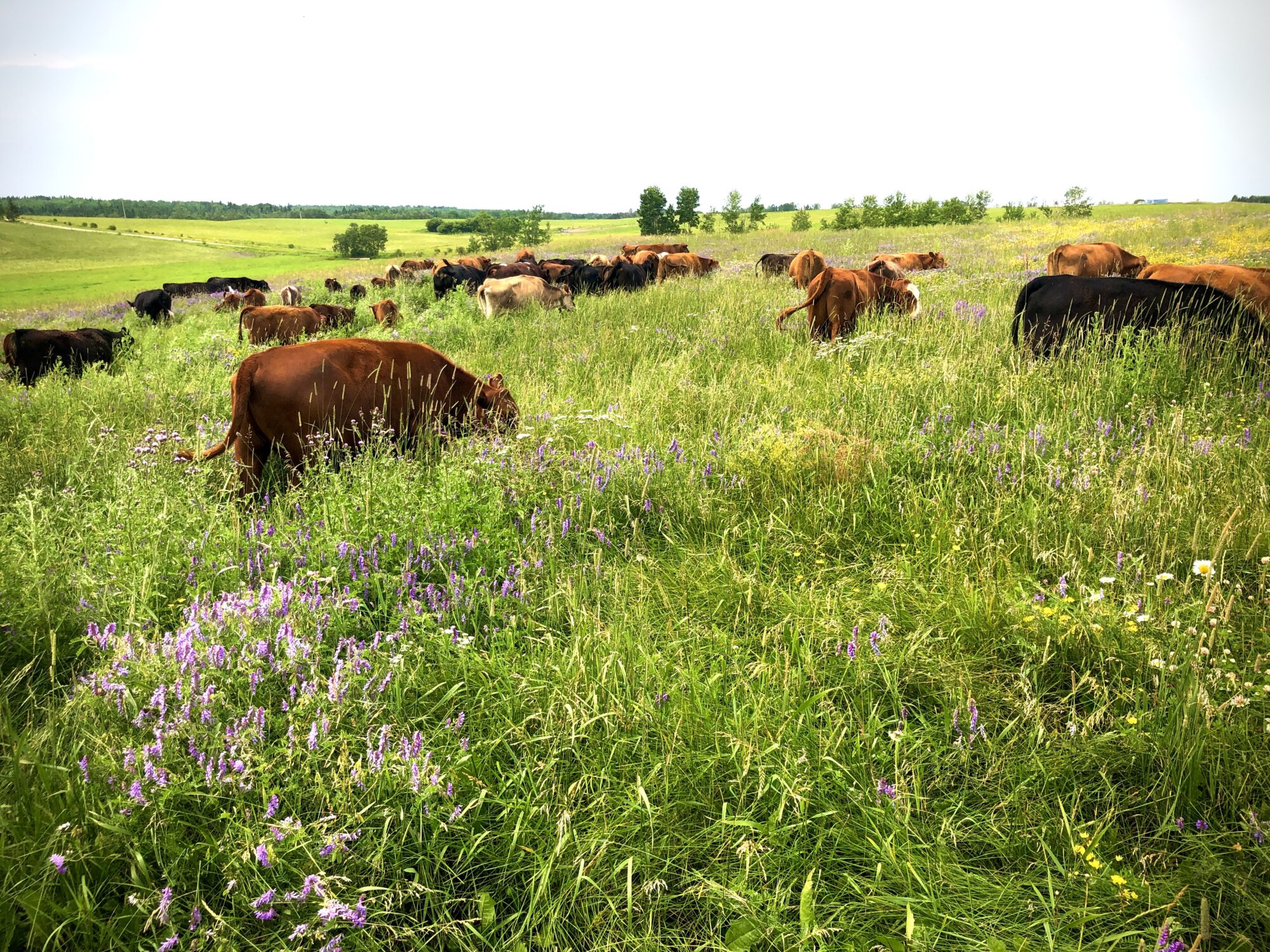
- Adaptive multi-paddock grazing Adaptive multi-paddock (amp) grazing is a regenerative grazing system in which livestock are grazed in small paddocks and are moved frequently, resulting in short but intense grazing intervals. the system of multiple small paddocks means that cattle do not circle back to a pasture for a long period of time, allowing for long pasture recovery periods. the word “adaptive” in amp means adapting the duration of livestock on a pasture according to forage availability and the weather, all in the goal of avoiding overgrazing and overstocking.
- Bale grazing Feeding livestock by placing hay bales directly on pasture during fall or winter, allowing animals to graze in place while naturally distributing manure and nutrients.
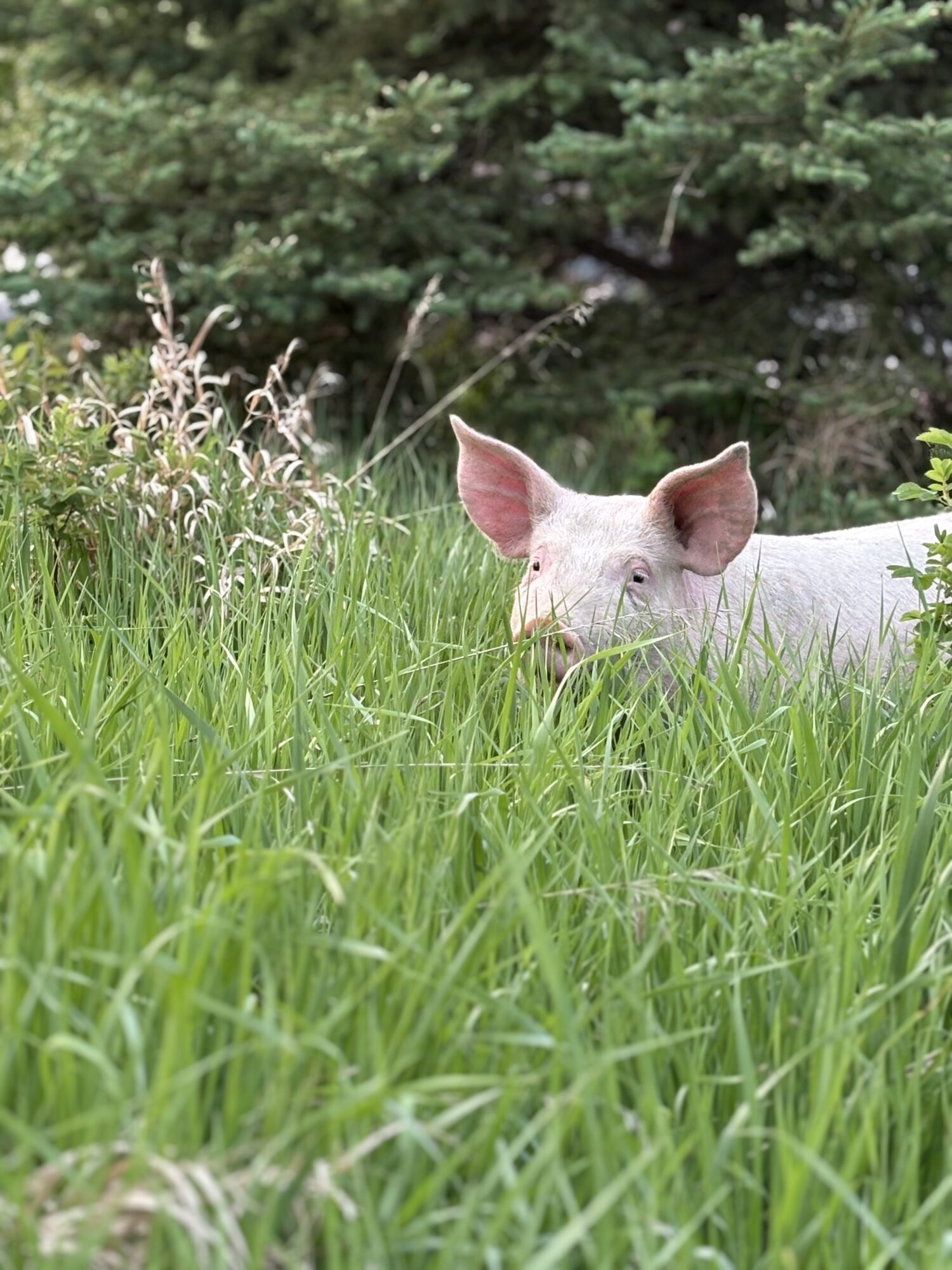
- Pastured pigs or poultry The managed integration of pigs or poultry on pasture.
- Adaptive multi-paddock grazing
- Optimize input use
- Manure Manure (also known as livestock manure) is a type of soil amendment rich in nitrogen that integrates soil organic matter back into the soil and feeds the soil food web.
- Minimal to no use of synthetic fertilizers Fertilizers that are derived from synthetic sources. \r\nas plants extract nutrients (nitrogen, phosphorus, potassium, and sulfur are the four most important nutrients) from the soil during every growing season, they must be replenished through fertilizers, manure, legume cover crops (through nitrogen fixing), and compost added to fields annually.
- Minimal to no use of synthetic pesticides Any product, device, organism, substance or thing that is manufactured, represented, sold or used as a means for directly or indirectly controlling, preventing, destroying, mitigating, attracting or repelling any pest (health canada, 2024).\r\nin canada, the most used pesticide active ingredient types are glyphosate, 2,4-d, glufosinate ammonium, and mcpa (all herbicides). then, there are also insecticides and fungicides such as chlorpyrifos, clothianidin, or chlorothalonil.
- Straw used as a carbon-rich amendment Straw is the dry stalks of cereal crops such as wheat, barley, oats, or rye, left over after the grain has been harvested. in agriculture, it can be applied to soil as an organic amendment to add carbon-rich material. another carbon-rich amendment is wood chips.
- Manure
- Improve water cycles
- Water conservation The optimized use of water for crops and trees, or strict water use during critical periods of crop stages.
- Wetland restoration Reestablishing the natural hydrology, vegetation, and ecological function of a wetland area that has been drained, degraded, or altered.
- Water conservation
Observations
- Better growing in drought conditions/ drought resistance
- Increase in insect species
- Change in species of plants present
- Darker, leafier grasses and plants
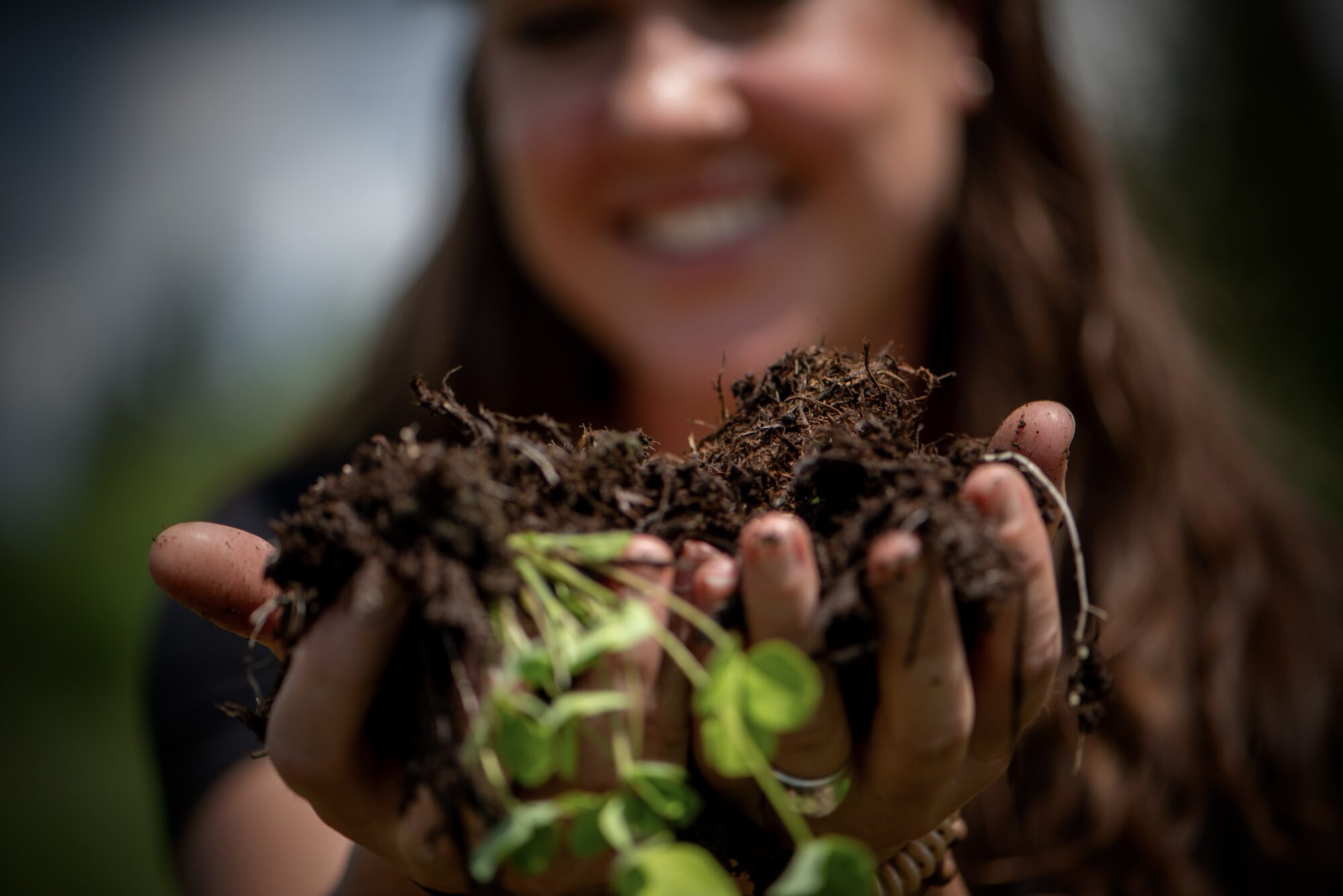
- Presence of dark black soil where hard clay had been present prior
- Increase in density and height of plants
- Presence of rare species of birds that do not normally come to our area
- increase in number of bird species
- increase in bee and pollinator populations/species
- increase in stocking density of grazing pastures
- increase in rate of recovery of forages after grazing
How to buy
- Online through our farm store (www.black-barn-farms.localline.ca for bulk orders and individual cuts to pick up in-person), the 807 Food Co-op (www.807foodcoop.ca to order and get home delivery to Dryden and Sioux Lookout residents), the Superior Seasons Farmers Market in Thunder Bay (www.superior seasons.ca to order) and to Rock Front Family Farm store on Front St in Sioux Lookout (physical location).