Clanman Jerseys Ltd
560 acresBox 132, Clanwilliam, Manitoba, R0J 0K0Sean Smith
To us, regenerative agriculture means working with nature to reduce inputs, increase farm resilience, and produce healthier animals and food.
Products
- Milk(commercial sales)
- Grass finished beef
- Compost
Regenerative Practices
- Minimize soil disturbance
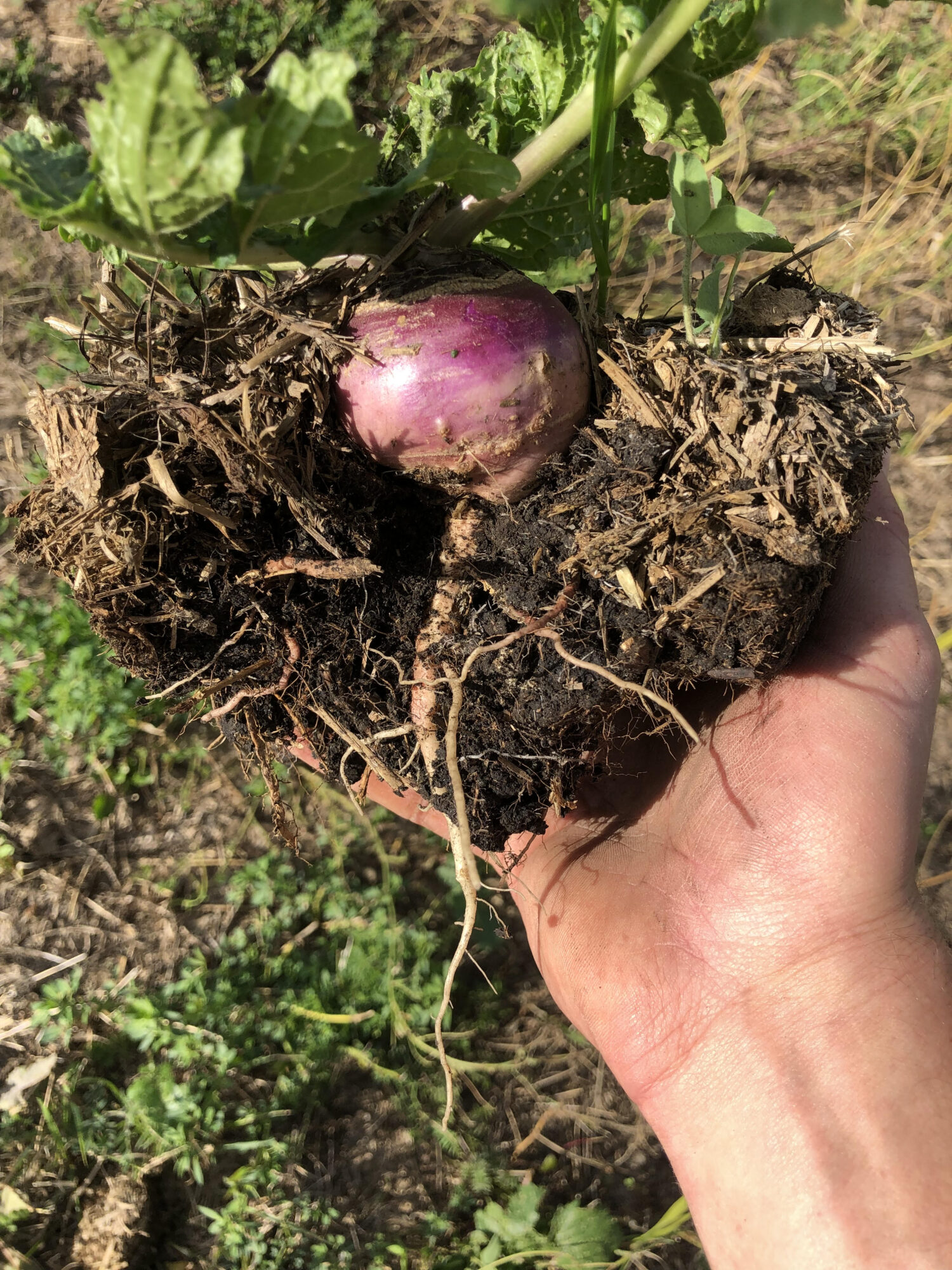
- No-till (direct seeding, zero-tillage) The soil is not worked at any point throughout the season. residue from the previous crop is left on the soil surface, and its root system is left intact. the following crop is seeded directly into the soil without tillage.
- Permanent grassland A parcel of land composed primarily of herbaceous grasses, including perennials and native plant species, which can be used for grazing, forage, or biomass production.
- No-till (direct seeding, zero-tillage)
- Keep the soil covered and maintain living roots year-round
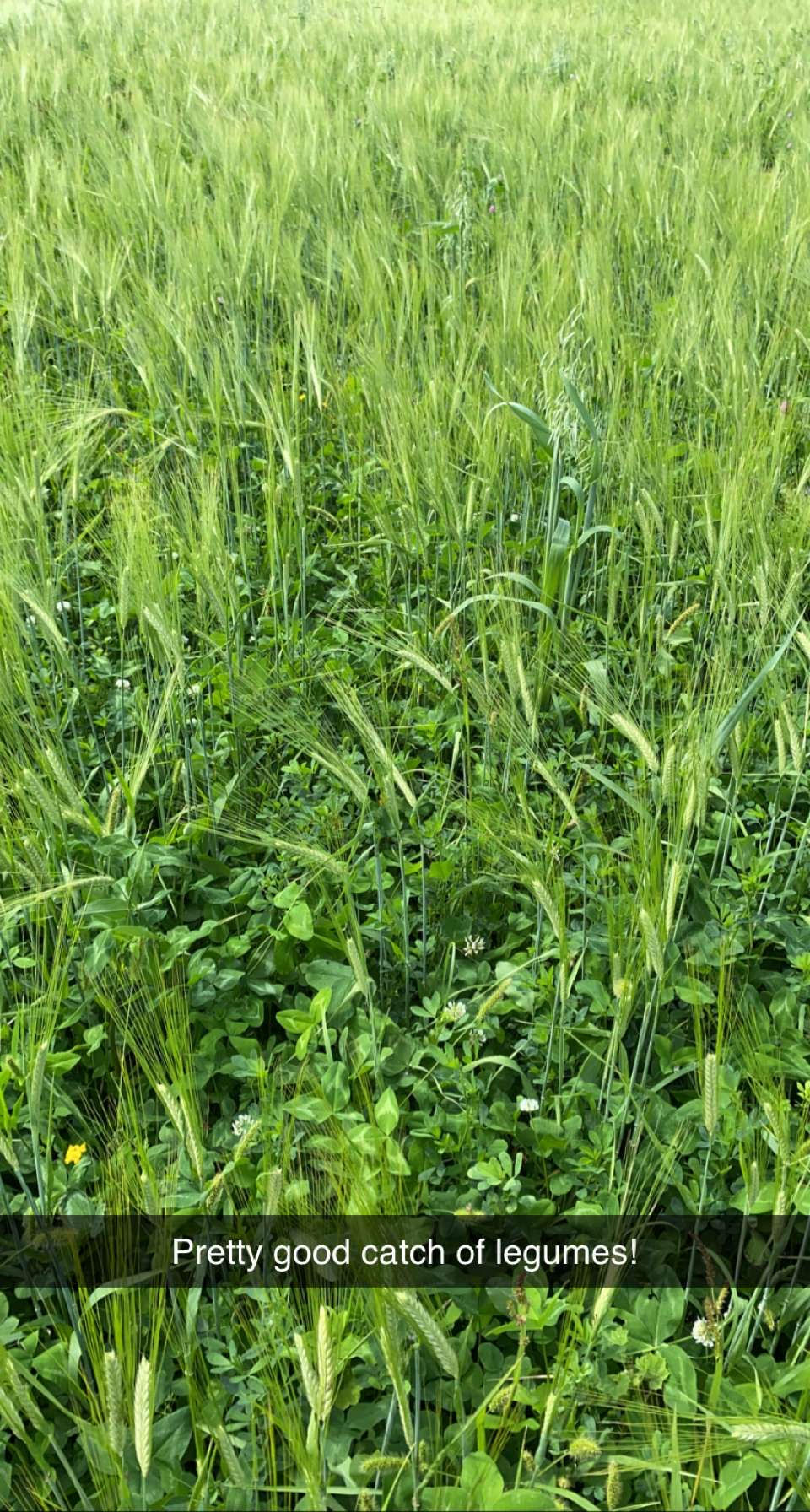
- Cover crops Plants grown alongside, preceding, or following cash crops with the purpose of increasing soil fertility, reducing soil erosion, and suppressing weeds.
- Cover crops
- Protect and enhance biodiversity
- Diverse crop rotations Planting crops with different characteristics in sequence on the same field over time
- Habitat conservation/creation/restoration The conservation, creation, and restoration of ecosystems to improve habitat value for wildlife. forests, prairies, riparian areas, or wetlands can be restored along farmland.
- Diverse crop rotations
- Optimize input use
- Compost Organic matter that has been recycled through a composting process into a form that can be used as a soil amendment.\r\ncompost is the stable, nutrient-rich product of decomposed organic matter—such as plant residues, manure, or food scraps—that has been biologically processed under controlled aerobic conditions.
- Compost tea A water-based compost that undergoes a fermentation process (with or without oxygen).
- Manure Manure (also known as livestock manure) is a type of soil amendment rich in nitrogen that integrates soil organic matter back into the soil and feeds the soil food web.
- Minimal to no use of synthetic fertilizers Fertilizers that are derived from synthetic sources. \r\nas plants extract nutrients (nitrogen, phosphorus, potassium, and sulfur are the four most important nutrients) from the soil during every growing season, they must be replenished through fertilizers, manure, legume cover crops (through nitrogen fixing), and compost added to fields annually.
- Compost
- Preserve and restore natural ecosystems
- Maintain living roots year-round (agroforestry and perennials)
- Perennial crops (grasslands) Crops that regrow each year in a specific climate without needing to be reseeded.
- Windbreaks A single row or multiple rows of trees and shrubs to break the force of winds.
- Riparian buffers Mixed woody and non-woody species planted along the edges of bodies of water (streams, rivers, lakes, or ponds).
- Perennial crops (grasslands)
- Improve water cycles
- Water conservation The optimized use of water for crops and trees, or strict water use during critical periods of crop stages.
- Wetland restoration Reestablishing the natural hydrology, vegetation, and ecological function of a wetland area that has been drained, degraded, or altered.
- Water conservation
- Integrate animals on the lands and ensure their welfare
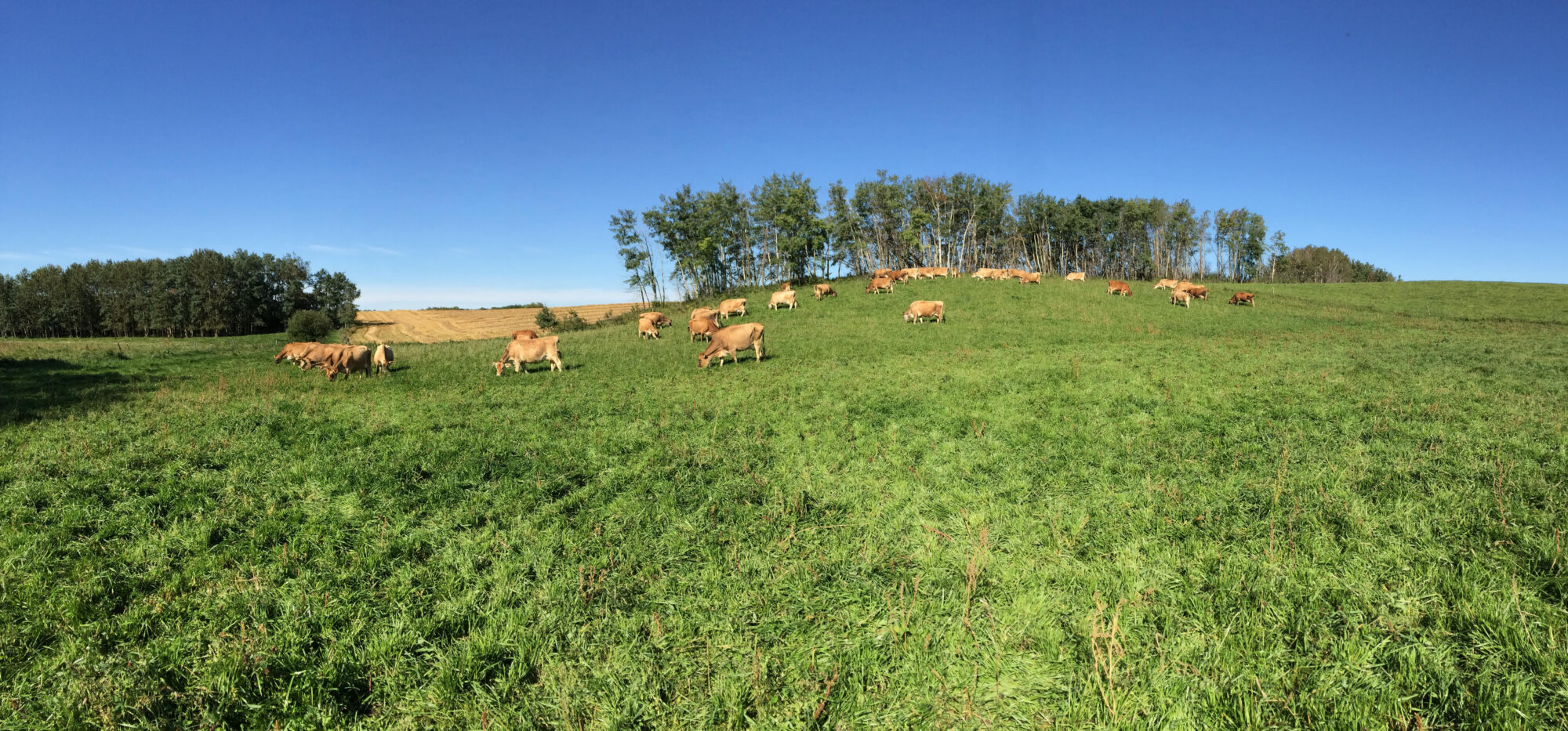
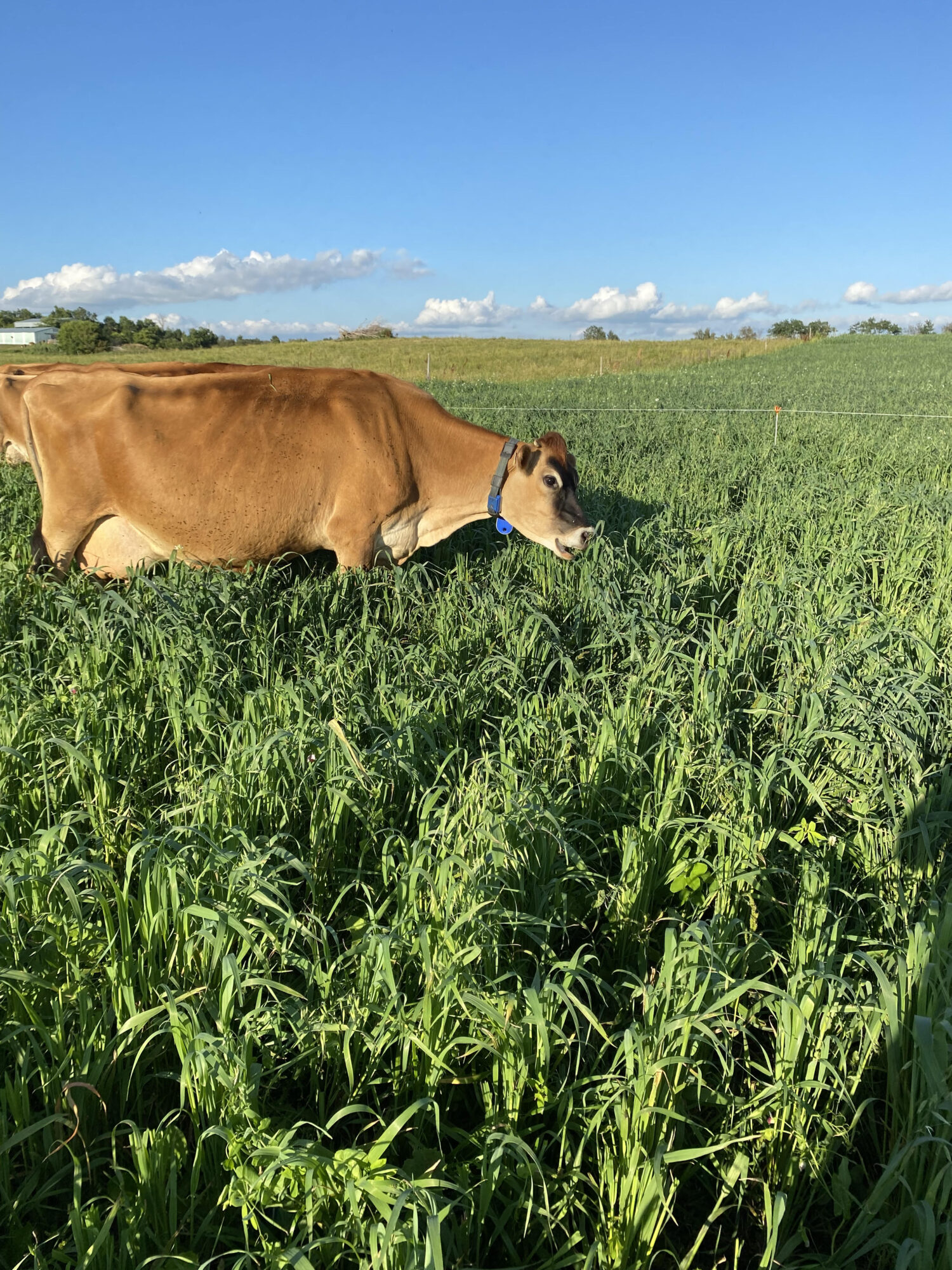
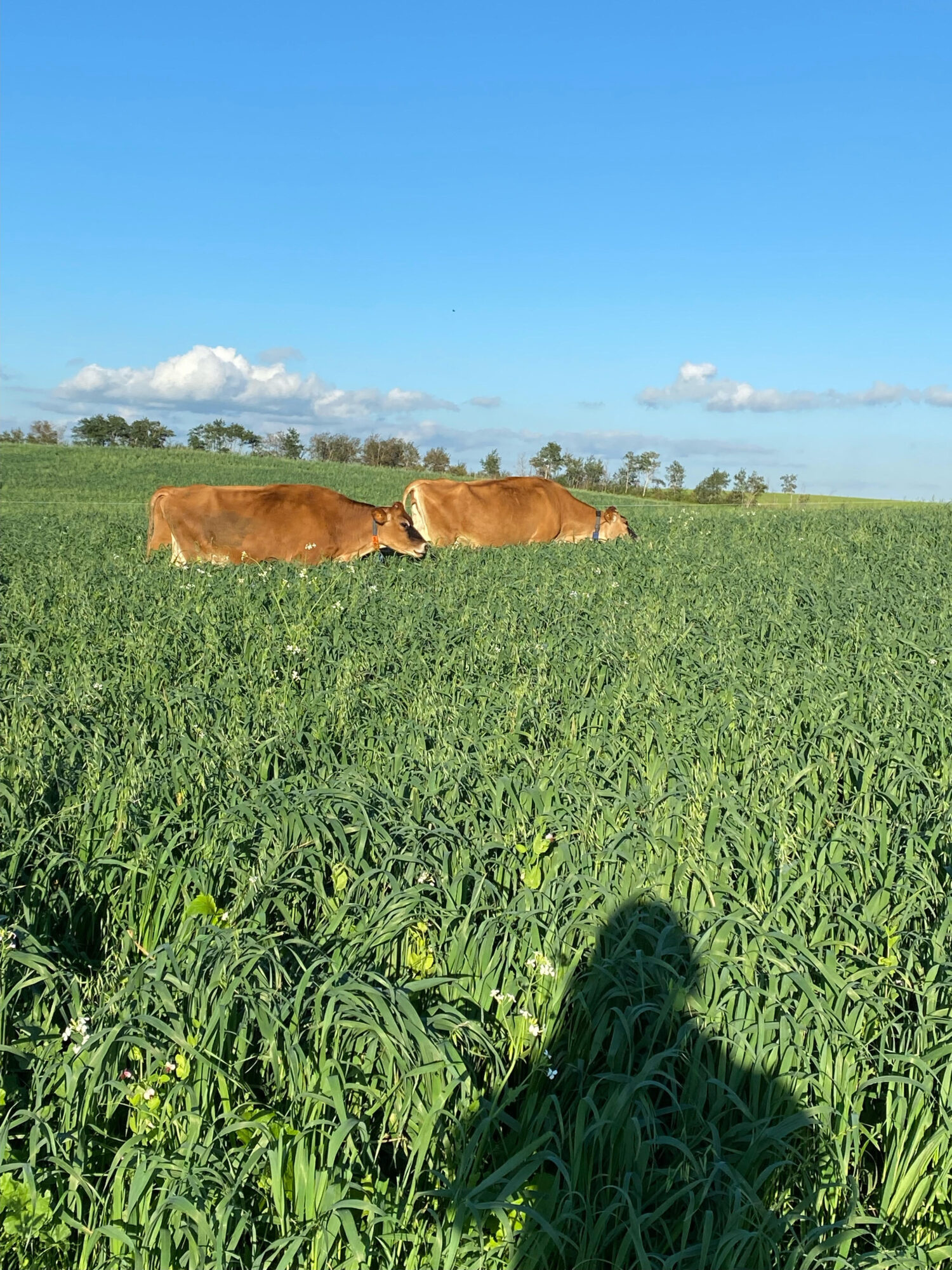
- Adaptive multi-paddock grazing Adaptive multi-paddock (amp) grazing is a regenerative grazing system in which livestock are grazed in small paddocks and are moved frequently, resulting in short but intense grazing intervals. the system of multiple small paddocks means that cattle do not circle back to a pasture for a long period of time, allowing for long pasture recovery periods. the word “adaptive” in amp means adapting the duration of livestock on a pasture according to forage availability and the weather, all in the goal of avoiding overgrazing and overstocking.
- Bale grazing Feeding livestock by placing hay bales directly on pasture during fall or winter, allowing animals to graze in place while naturally distributing manure and nutrients.
- Multi-species grazing A grazing system in which multiple species of livestock (cattle, sheep, chickens, etc.) are grazed on the same area of land, either at the same time or following one another in the rotation.
- Adaptive multi-paddock grazing
Observations
- We have seen a increase of organic matter to levels 2-4% higher then average of area farms, reduced inputs, increased grazing days, improved cow health
How to buy
- We offer dairy specific consulting, information, and farm tours. We have many years worth of experience with intensive grazing milking cows and heifers, zero till farming and cover crop selection and timing for high quality feed. After years of trials and adapting practices on our farm, we want to share this knowledge with other farmers because we feel the dairy industry can benefit in many ways from these practices.