Ferme Guayclair
400 acres235 Montée la Branche, Brownsburg-Chatham, Québec, J8G 2E5Stéphane Guay
Regenerative agriculture means working in harmony with, and not against, nature. Bringing biological life back to the soil.
Products
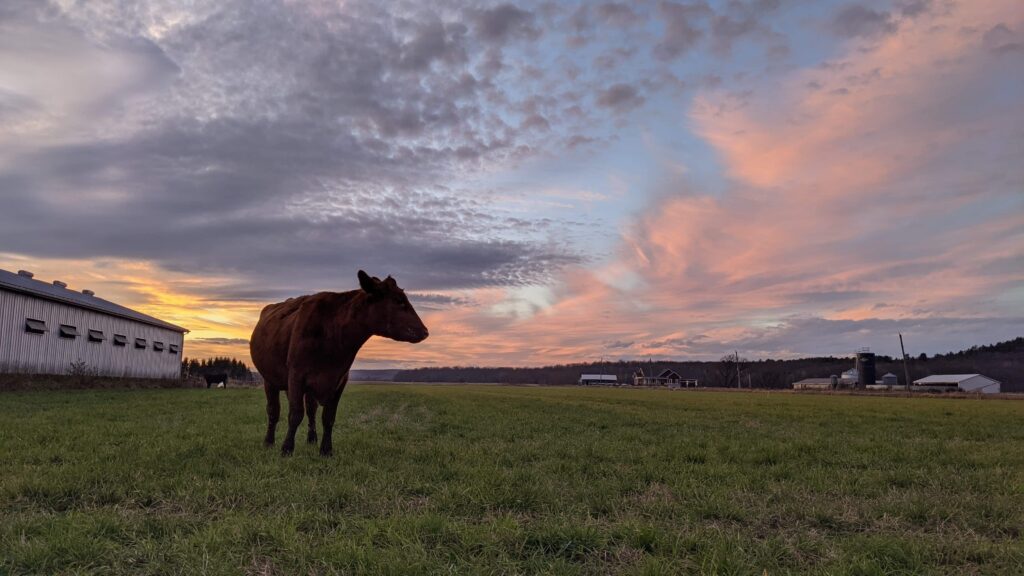
- Beef
- Wheat
- Soy
- Hay
Regenerative Practices
- Minimize soil disturbance
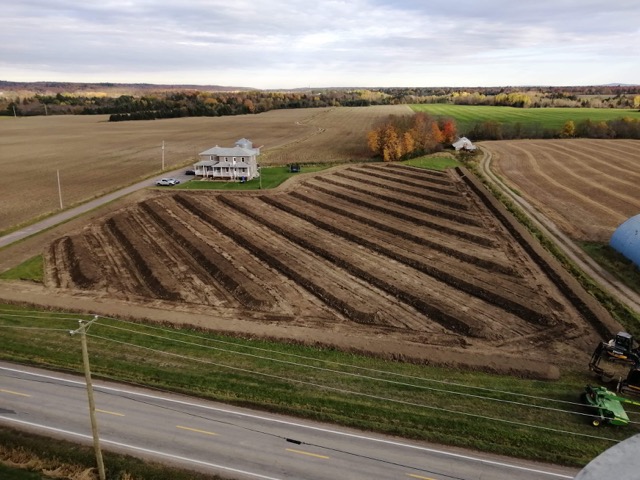
- No-till (direct seeding, zero-tillage) The soil is not worked at any point throughout the season. residue from the previous crop is left on the soil surface, and its root system is left intact. the following crop is seeded directly into the soil without tillage.
- Minimum-till Minimum tillage is a soil cultivation practice that reduces the number, depth (0-10 cm), and intensity of tillage operations (no inversion of the soil) to minimize soil disturbance.
- Permanent grassland A parcel of land composed primarily of herbaceous grasses, including perennials and native plant species, which can be used for grazing, forage, or biomass production.
- No-till (direct seeding, zero-tillage)
- Keep the soil covered and maintain living roots year-round
- Cover crops Plants grown alongside, preceding, or following cash crops with the purpose of increasing soil fertility, reducing soil erosion, and suppressing weeds.
- Intercropping Simultaneously growing two or more crops adjacent to one another, on the same piece of land and within the same growing season. crops are paired based on their differing, yet complementary, space and resource requirements.
- Cover crops
- Protect and enhance biodiversity
- Diverse crop rotations Planting crops with different characteristics in sequence on the same field over time
- Habitat conservation/creation/restoration The conservation, creation, and restoration of ecosystems to improve habitat value for wildlife. forests, prairies, riparian areas, or wetlands can be restored along farmland.
- Diverse crop rotations
- Optimize input use
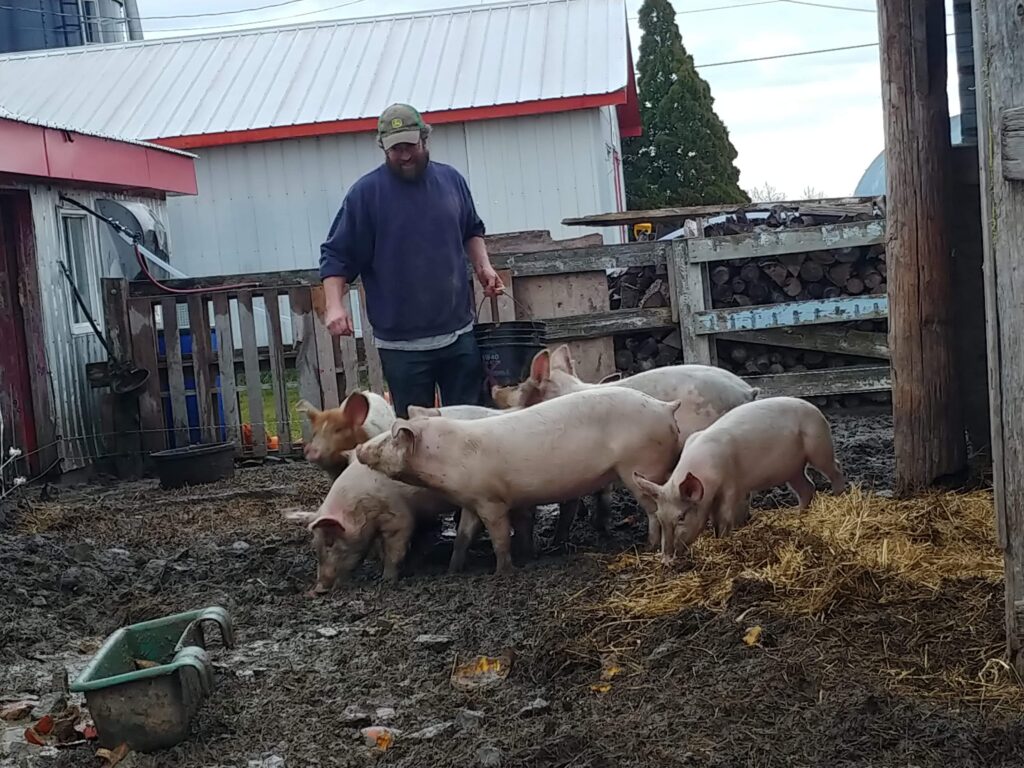
- Manure Manure (also known as livestock manure) is a type of soil amendment rich in nitrogen that integrates soil organic matter back into the soil and feeds the soil food web.
- Manure
- Preserve and restore natural ecosystems
- Integrate animals on the lands and ensure their welfare
- Adaptive multi-paddock grazing Adaptive multi-paddock (amp) grazing is a regenerative grazing system in which livestock are grazed in small paddocks and are moved frequently, resulting in short but intense grazing intervals. the system of multiple small paddocks means that cattle do not circle back to a pasture for a long period of time, allowing for long pasture recovery periods. the word “adaptive” in amp means adapting the duration of livestock on a pasture according to forage availability and the weather, all in the goal of avoiding overgrazing and overstocking.
- Adaptive multi-paddock grazing
- Maintain living roots year-round (agroforestry and perennials)
- Riparian buffers Mixed woody and non-woody species planted along the edges of bodies of water (streams, rivers, lakes, or ponds).
- Riparian buffers
- Improve water cycles
How to buy
- Visit the store directly on the farm, by appointment