Just Food Community Farm
25 acres2391 Pepin Court, Gloucester, Ontario, K1B 4Z3Just Food
STORIES OF REGENERATION:
SHORT FILM
Healthy local food at Just Food Community Farm
PODCAST
Podcast: Everybody Wins at Just Food Community Farm
WEBINAR
🎥 Regenerating our roots: Building community and honouring culture through food
Photo gallery
Ontario
REGENERATIVE PRINCIPLE
Prioritize social justice, food sovereignty, and economic viability
2023-10-01 | Live Event
Discover more
Regenerative Practices
- Minimize soil disturbance
- No-till (direct seeding, zero-tillage) The soil is not worked at any point throughout the season. residue from the previous crop is left on the soil surface, and its root system is left intact. the following crop is seeded directly into the soil without tillage.
- Minimum-till Minimum tillage is a soil cultivation practice that reduces the number, depth (0-10 cm), and intensity of tillage operations (no inversion of the soil) to minimize soil disturbance.
- No-till (direct seeding, zero-tillage)
- Keep the soil covered and maintain living roots year-round
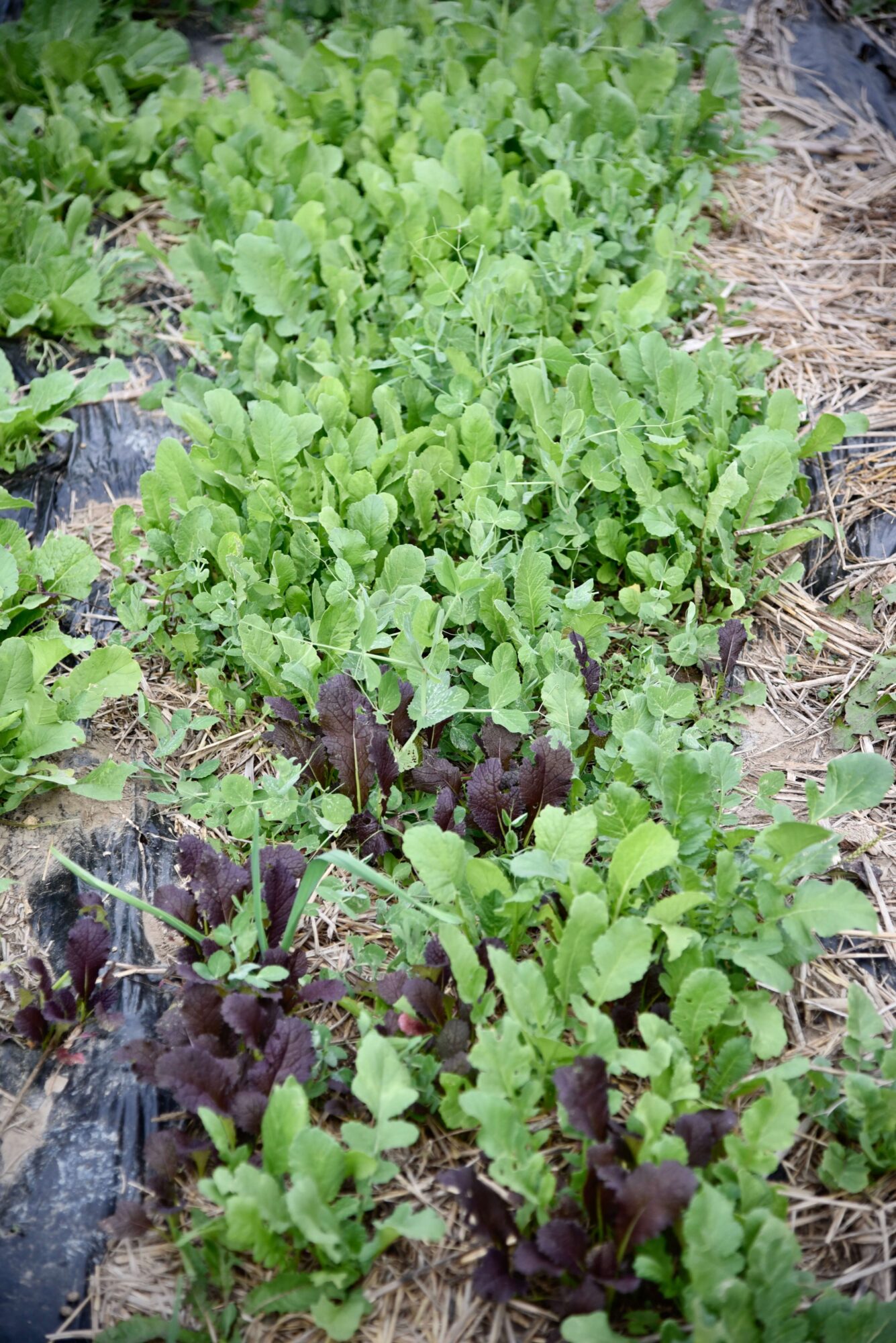
- Cover crops Plants grown alongside, preceding, or following cash crops with the purpose of increasing soil fertility, reducing soil erosion, and suppressing weeds.
- Organic mulch Organic mulch involves covering the soil surface with a protective barrier to increase soil health, reduce soil erosion, and suppress weeds. the mulch can be composed of various organic materials such as straw, leaves, or compost.
- Plastic mulch Non-living, non-organic sheets of polyethylene terephthalate (pet) plastic applied alongside, or following, cash crops to protect the soil.
- Cover crops
- Protect and enhance biodiversity
- Companion cropping Simultaneously growing two or more crops together in the same field so they complement one another by improving nutrient cycling, suppressing pests and weeds, and enhancing biodiversity.
- Diverse crop rotations Planting crops with different characteristics in sequence on the same field over time
- Pollinator buffers Patches or rows of diverse flowering vegetation that provide pollinators with permanent habitats and food sources. they can be planted as intercrops or at the edge of fields.
- Habitat conservation/creation/restoration The conservation, creation, and restoration of ecosystems to improve habitat value for wildlife. forests, prairies, riparian areas, or wetlands can be restored along farmland.
- Companion cropping
- Optimize input use
- Compost Organic matter that has been recycled through a composting process into a form that can be used as a soil amendment.\r\ncompost is the stable, nutrient-rich product of decomposed organic matter—such as plant residues, manure, or food scraps—that has been biologically processed under controlled aerobic conditions.
- Compost tea A water-based compost that undergoes a fermentation process (with or without oxygen).
- Manure Manure (also known as livestock manure) is a type of soil amendment rich in nitrogen that integrates soil organic matter back into the soil and feeds the soil food web.
- Minimal to no use of synthetic pesticides Any product, device, organism, substance or thing that is manufactured, represented, sold or used as a means for directly or indirectly controlling, preventing, destroying, mitigating, attracting or repelling any pest (health canada, 2024).\r\nin canada, the most used pesticide active ingredient types are glyphosate, 2,4-d, glufosinate ammonium, and mcpa (all herbicides). then, there are also insecticides and fungicides such as chlorpyrifos, clothianidin, or chlorothalonil.
- Minimal to no use of synthetic fertilizers Fertilizers that are derived from synthetic sources. \r\nas plants extract nutrients (nitrogen, phosphorus, potassium, and sulfur are the four most important nutrients) from the soil during every growing season, they must be replenished through fertilizers, manure, legume cover crops (through nitrogen fixing), and compost added to fields annually.
- Compost
- Preserve and restore natural ecosystems
- Maintain living roots year-round (agroforestry and perennials)
- Perennial crops (grasslands) Crops that regrow each year in a specific climate without needing to be reseeded.
- Windbreaks A single row or multiple rows of trees and shrubs to break the force of winds.
- Native perennial vegetation conservation The conservation of existing—or reintroduction of—native perennial vegetation, those that occur naturally in a region in which it evolved. it includes grasslands, woodlands, wetlands, and coastal habitats.
- Perennial crops (grasslands)
- Integrate animals on the lands and ensure their welfare
- Pastured pigs or poultry The managed integration of pigs or poultry on pasture.
- Pastured pigs or poultry
Certifications
- Organic (Ecocert)
How to buy
- Weekly Farm Stand or Direct from each farmer