
Joyfully Organic Farm
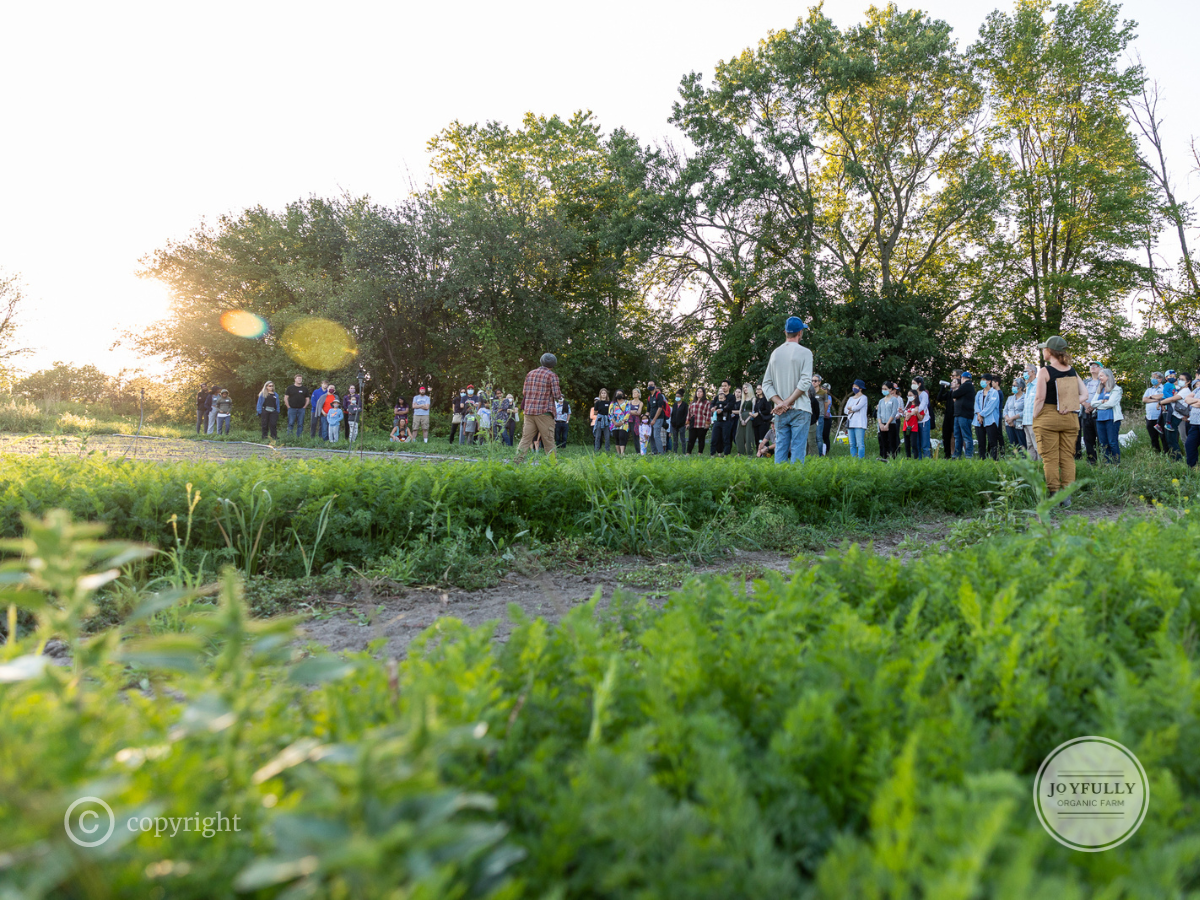
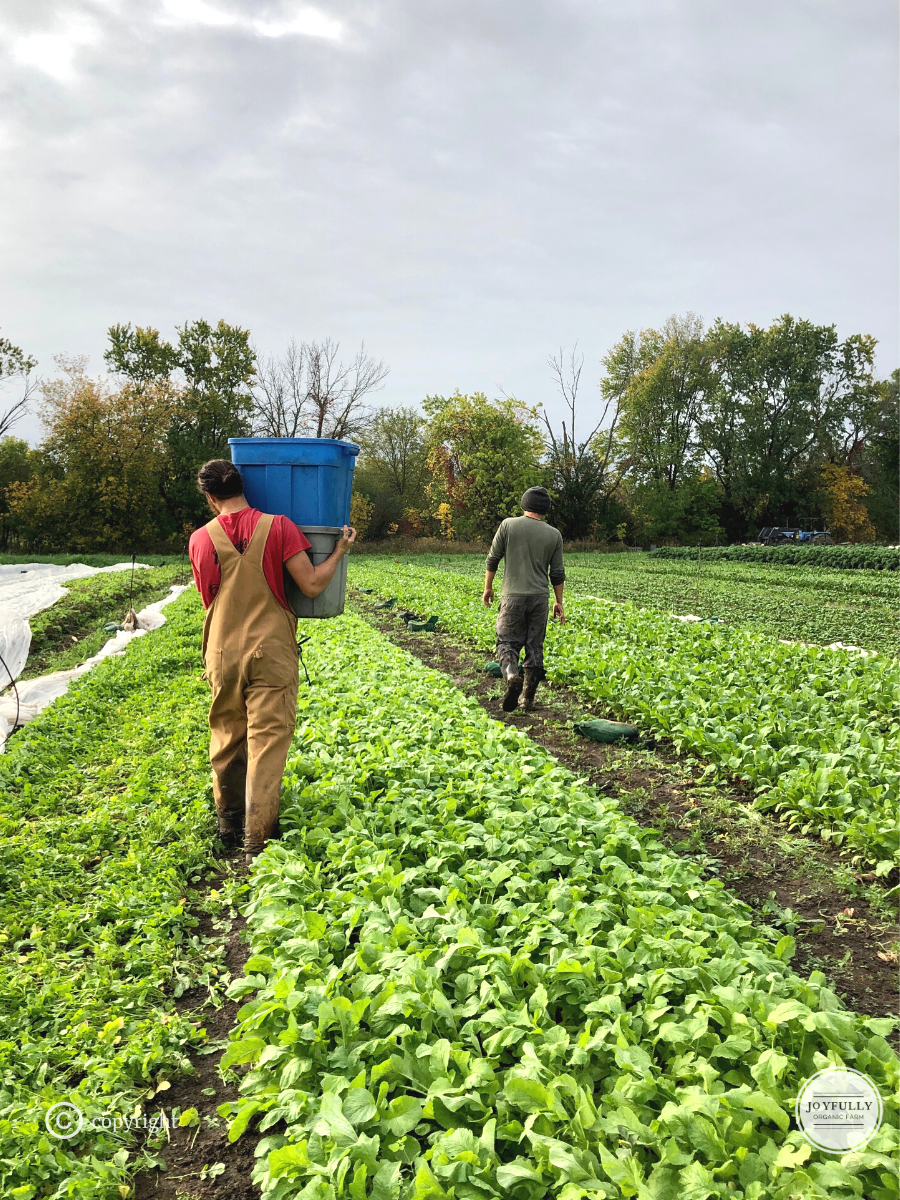
10 acresMarkham, OntarioLiz & Matt
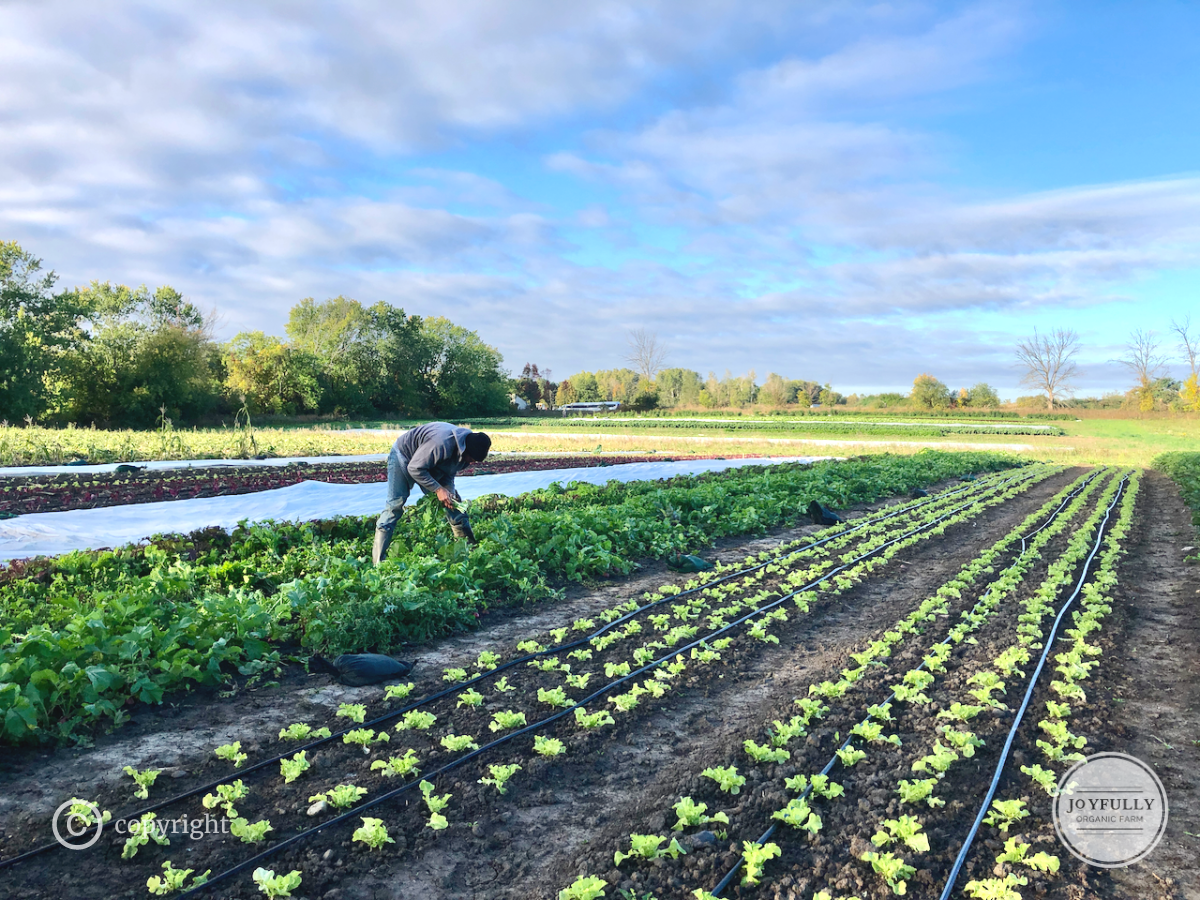
We believe taste, nutrition, and farm resiliency begins and ends with how we steward our soil.
Products
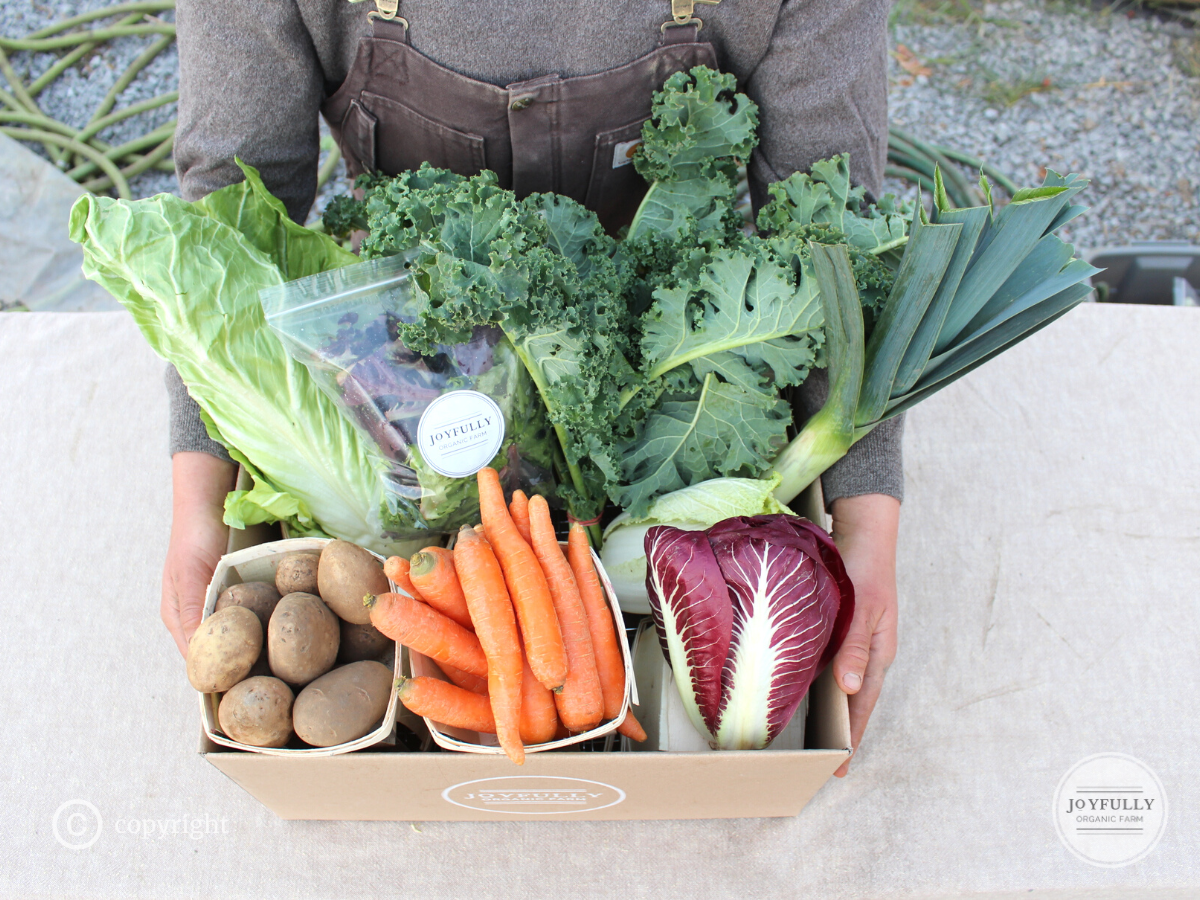
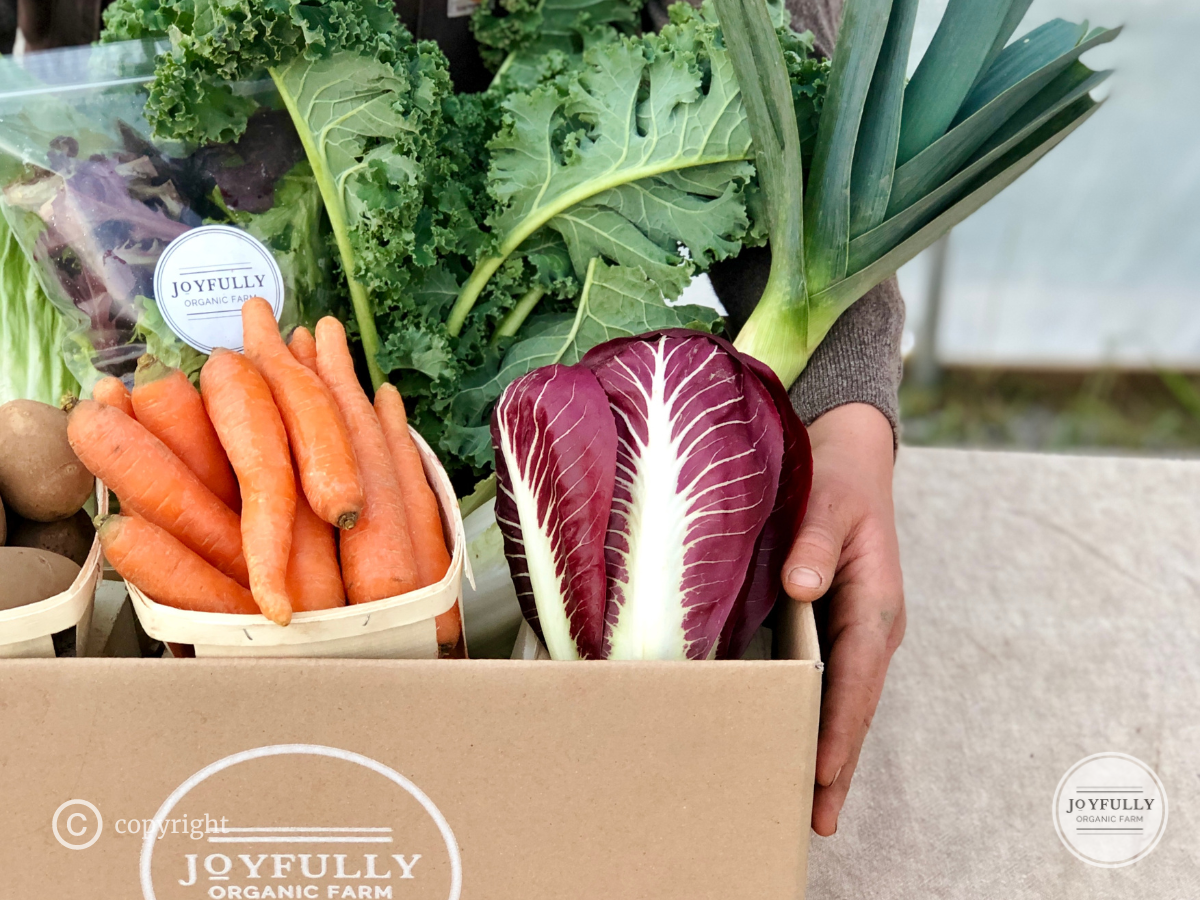
- CSA Boxes
- Broccoli
- Arugula
- Spinach
- Lettuce
- Garlic
- Kale
- Radishes
- Beets
- Carrots
- Zucchini
- Turnips
- Kohlrabi
- Cabbage
- Parsnips
- Potatoes
- Sunchokes
- Onions
- Salad Mixes
- Swiss Chard
- Rutabaga
- Asian Greens
- Leeks
- Squash
- Herbs
- Flowers
- Tomatoes
- Cherry Tomatoes
- Eggplant
Regenerative Practices
- Minimize soil disturbance
- Minimum-till Minimum tillage is a soil cultivation practice that reduces the number, depth (0-10 cm), and intensity of tillage operations (no inversion of the soil) to minimize soil disturbance.
- Minimum-till
- Keep the soil covered and maintain living roots year-round
- Cover crops Plants grown alongside, preceding, or following cash crops with the purpose of increasing soil fertility, reducing soil erosion, and suppressing weeds.
- Intercropping Simultaneously growing two or more crops adjacent to one another, on the same piece of land and within the same growing season. crops are paired based on their differing, yet complementary, space and resource requirements.
- Relay (or double) cropping Growing two or more crops one after another on the same field and within the same growing season. crops are combined in a relay to maximize the season according to the maturation or harvest stage of the crops.
- Cover crops
- Protect and enhance biodiversity
- Diverse crop rotations Planting crops with different characteristics in sequence on the same field over time
- Pollinator buffers Patches or rows of diverse flowering vegetation that provide pollinators with permanent habitats and food sources. they can be planted as intercrops or at the edge of fields.
- Habitat conservation/creation/restoration The conservation, creation, and restoration of ecosystems to improve habitat value for wildlife. forests, prairies, riparian areas, or wetlands can be restored along farmland.
- Diverse crop rotations
- Optimize input use
- Compost Organic matter that has been recycled through a composting process into a form that can be used as a soil amendment.\r\ncompost is the stable, nutrient-rich product of decomposed organic matter—such as plant residues, manure, or food scraps—that has been biologically processed under controlled aerobic conditions.
- Manure Manure (also known as livestock manure) is a type of soil amendment rich in nitrogen that integrates soil organic matter back into the soil and feeds the soil food web.
- Minimal to no use of synthetic pesticides Any product, device, organism, substance or thing that is manufactured, represented, sold or used as a means for directly or indirectly controlling, preventing, destroying, mitigating, attracting or repelling any pest (health canada, 2024).\r\nin canada, the most used pesticide active ingredient types are glyphosate, 2,4-d, glufosinate ammonium, and mcpa (all herbicides). then, there are also insecticides and fungicides such as chlorpyrifos, clothianidin, or chlorothalonil.
- Minimal to no use of synthetic fertilizers Fertilizers that are derived from synthetic sources. \r\nas plants extract nutrients (nitrogen, phosphorus, potassium, and sulfur are the four most important nutrients) from the soil during every growing season, they must be replenished through fertilizers, manure, legume cover crops (through nitrogen fixing), and compost added to fields annually.
- Compost
- Preserve and restore natural ecosystems
- Maintain living roots year-round (agroforestry and perennials)
- Perennial crops (grasslands) Crops that regrow each year in a specific climate without needing to be reseeded.
- Windbreaks A single row or multiple rows of trees and shrubs to break the force of winds.
- Perennial crops (grasslands)
- Integrate animals on the lands and ensure their welfare
- Adaptive multi-paddock grazing Adaptive multi-paddock (amp) grazing is a regenerative grazing system in which livestock are grazed in small paddocks and are moved frequently, resulting in short but intense grazing intervals. the system of multiple small paddocks means that cattle do not circle back to a pasture for a long period of time, allowing for long pasture recovery periods. the word “adaptive” in amp means adapting the duration of livestock on a pasture according to forage availability and the weather, all in the goal of avoiding overgrazing and overstocking.
- Adaptive multi-paddock grazing
- Improve water cycles
- Wetland restoration Reestablishing the natural hydrology, vegetation, and ecological function of a wetland area that has been drained, degraded, or altered.
- Water conservation The optimized use of water for crops and trees, or strict water use during critical periods of crop stages.
- Wetland restoration
Observations
- Increase in soil health
- Vibrance of the vegetable crops
- Increase in biodiversity
- Increase in overall adaptability and resiliency of the farm
Certifications
- Organic (Pro Cert Canada)
How to buy
- CSA Boxes, Farmer Markets, Wholesale