

Cover photo source: Association Française d’Agroforesterie
Farmers across Canada and beyond are demonstrating how trees can play a powerful role in grazing systems. Silvopasture in livestock systems—the intentional integration of trees into grazing landscapes—offers a regenerative approach that supports feed security, animal welfare, biodiversity, and long-term farm viability.
In spring 2025, Groupe ProConseil and its partners, including Regeneration Canada, organized a networking workshop focused on silvopasture in livestock systems. Farmers and advisors shared concrete examples of how trees contribute to farm resilience, livestock performance, and on-farm biodiversity.
The highlights below bring together lessons from farms in France and Quebec.
How Fodder Trees Support Livestock During Drought and Feed Shortages
Adrien Messéan, Aisne, France.
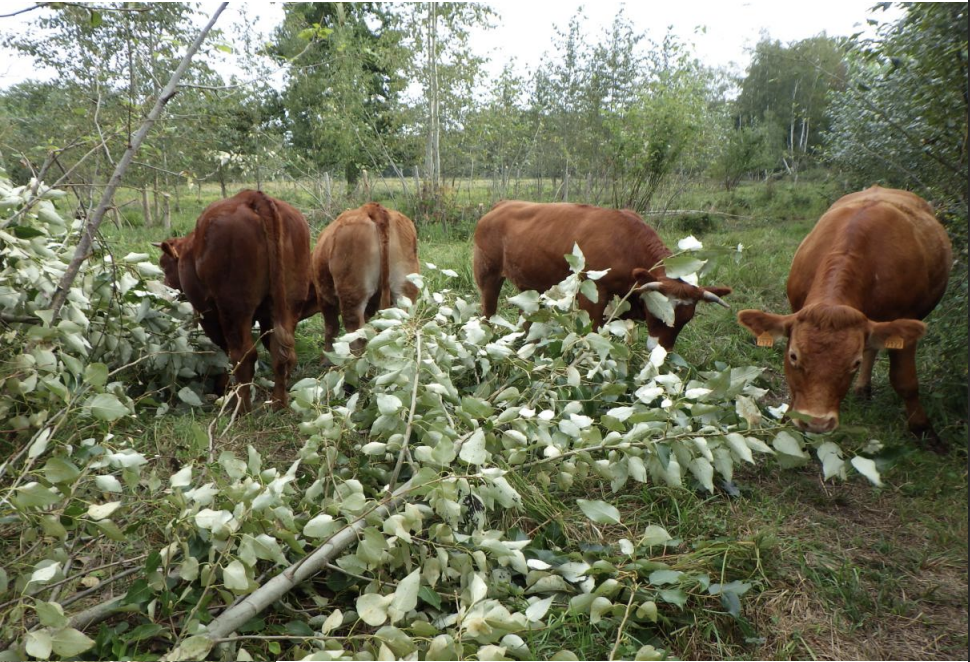
On Adrien Messéan’s cattle farm, trees and shrubs provide a supplementary forage resource for his animals. Over time, he has developed several types of fodder on his land, such as hedgerows, woodland edges, fallow areas, groves, isolated trees, and even pollarded willows.
Here, trees are strategically used to:
- Compensate for the lack of grassland forage during drought periods
- Maintain consistent animal growth and performance
- Preserve dry forage reserves
- Maintain feed autonomy without relying on external inputs
- Adapt to unfavourable climatic conditions
On his farm, more than 25 species are spontaneously consumed by cattle, along with about 30 additional species offered as complementary forage. Poplar, willow, and ash are among the animals’ preferred species. Cattle can browse branches up to 8 mm in diameter.
The goal is not to replace pasture-based systems, but to use trees to enhance the grazing system, particularly through rotational grazing.
Challenges of Managing Fodder Trees in Grazing Systems
Despite the benefits, managing fodder trees comes with challenges, including:
- Ensuring accessibility of woody forage
- Improving palatability and nutritional quality
- Optimizing availability and consumption
- Maintaining long-term sustainability of tree resources
Farmers address these challenges through multiple approaches, including controlled access with electric fencing, hedgerows used as paddock dividers, selective pruning of lower branches, and pollarding willows.
Beyond forage, trees also provide shade, wind protection, firewood, wood chips for bedding, and critical habitat for many animals and insects—reinforcing the link between livestock and biodiversity.
The conference highlighted that fodder trees are attracting strong interest and will certainly continue to be part of our agricultural conversations in the future!
For further reading, see:
Fodder trees: a supplementary resource of forage for livestock. (April 2025).
Silvopasture in Practice: Year-Round Outdoor Dairy Farming at Ticouapé Farm
Jean-Marie Baril, St-Félicien, Quebec.
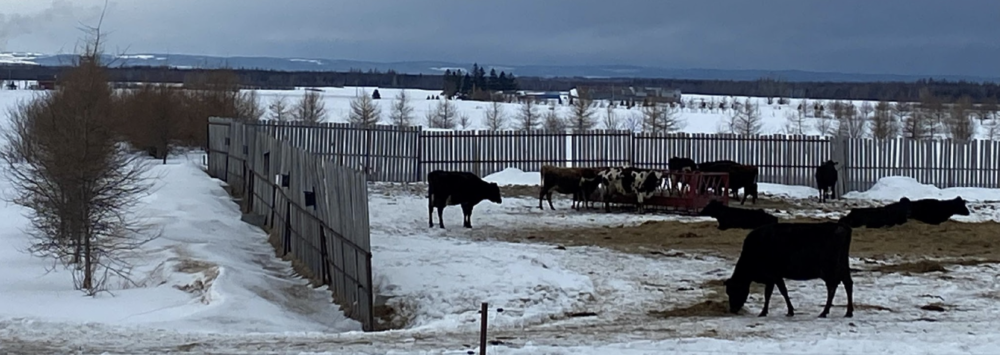
In 2012, Jean-Marie Baril fundamentally transformed his dairy system by moving his herd outdoors year-round. Over time, he developed a system designed to support animal health, an active family life, and long-term farm resilience.
Today, the herd includes 140 animals, including 100 milking cows. They are crossbred Holstein, Jersey, Ayrshire, and Brown Swiss, for greater hardiness. More than 80% of the cows calve in the spring. Nurse cows provide milk to calves, which are weaned at around eight months. All the animals are pasture-raised. At Ticouapé Farm, cows average 6 to 7 lactations, and the culling rate is just 15%.
The farm spans 1,050 hectares, just over half of which is cultivated. The feeding system is entirely “green,” relying on a balanced mix of pasture (50%) and forage (50%).
As a result of this intentional transition, milk production decreased from an average of 10,000 kg to 3,500 kg per cow per year. Cows are milked once daily, producing approximately 0.55 kg of fat per cow and 60 kg/day of quota.
While production per cow is lower than in conventional systems, the operation remains economically viable—supporting a strong quality of life, financial stability, and a system that aligns with Jean-Marie’s values.
Designing Tree-Based Wintering Systems for Animal Comfort
During winter, the cows are housed in a large paddock protected by a wooden windbreak reinforced with a tree hedge, shielding the herd from the wind. Feeding occurs near windbreak walls to reduce snow accumulation, and straw is added every other day to keep the cows dry.
On the pasture side, he maintains 40 km of fencing and 9 km of water lines. There are also 35 km of hedgerows that must be trimmed to keep the trees healthy and effective.
Water troughs are spaced every 100 to 200 meters to ensure consistent hydration. The result is a system where animals live in symbiosis with their environment—an example of trees in grazing systems supporting both productivity and animal welfare.
When asked what his most useful tool is, Jean-Marie replies: “The bucket!” Because whenever a problem arises, he sits on it to think, and to keep improving his unique system.
A reminder that observation, reflection, and continuous improvement are central to regenerative practice.
Using Agroforestry to Increase Biodiversity on Dairy Farms
The Gilles Potvin family, Ferme Au Gré des Saisons, Saguenay–Lac-Saint-Jean, Quebec.
At Ferme Au Gré des Saisons, biodiversity and family well-being are central to decision-making. The farm manages 106 hectares, including 27 hectares of pasture. The herd includes 76 animals, with 50 dairy cows producing under a quota of 39 kg/day. Milking is carried out using a six-place step parlour system.
On this farm, family is at the heart of decision-making, with the goal of creating wealth, abundance, and lasting memories for the little ones. But happiness must also be found in the fields!
Recognizing that open pasture without shade is not optimal for animal comfort, the family launched a major agroforestry project in 2016 to restructure their grazing system.
Hedgerows for Shade, Habitat, and Resilience
The project included:
- Planting 2 km of tree and shrub rows for shade and shelter for the cows
- Installing birdhouses and insect hotels to support biodiversity
A grant from Quebec’s Prime-Vert program for biodiversity-friendly projects helped finance the almost $9,000 project.
In total, 29 tree and shrub species will be planted, including fruit-bearing trees such as apple, plum, pear, sea buckthorn, and haskaps.
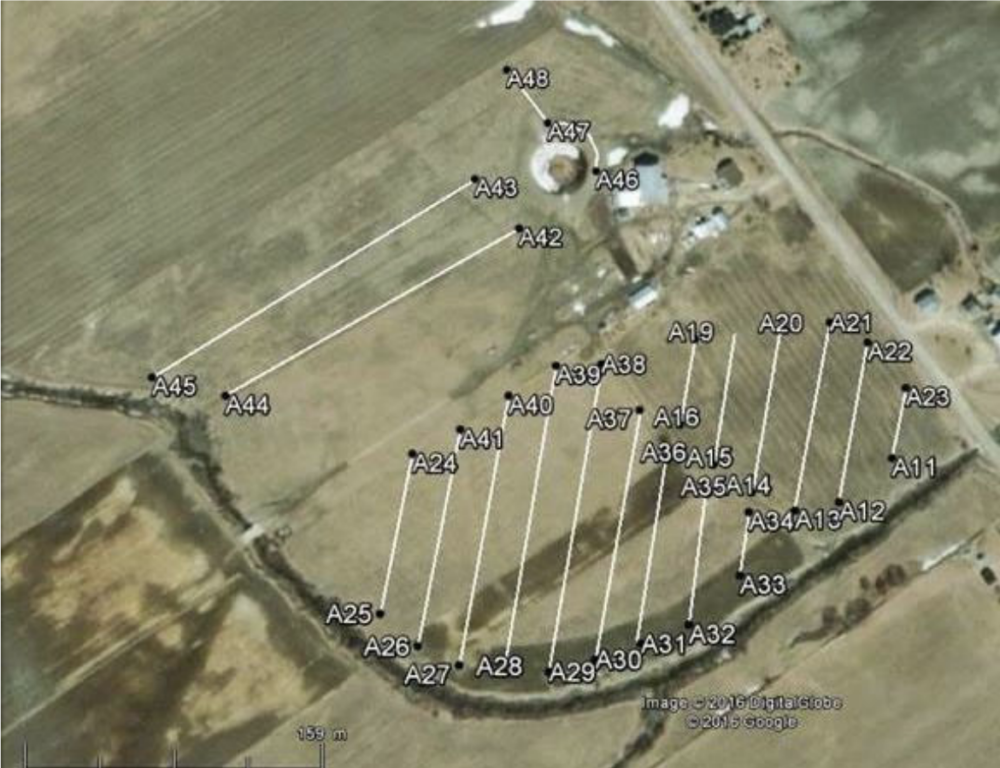
The rows were planted on a north–south axis to reduce wind-driven drought in summer and improve snow retention in winter—demonstrating thoughtful design within agroforestry systems.
With support from extended family and community members, nearly 700 seedlings will be planted during a community work day.

From the 2016 dream to today, the family has reaped many benefits:
- Harvesting raspberries and haskaps in the very first year
- Increased bird and insect presence
- Easier recruitment and retention of farm labour
- Picking fruits and nuts at different times throughout the summer
- Enhanced family time
- Beautification of the farmstead
Looking ahead, the family plans to expand riparian buffers to host even more plant species and further enhance biodiversity. The loss of biodiversity is, after all, a concern for consumers. In their view, producers should stand out and innovate in this area.
“Could enhancing biodiversity on farms strengthen public trust and consumer support? Could ecological goods and services play a greater role in farm viability?” These are certainly thought-provoking questions for discussion…
Why Silvopasture Is Gaining Momentum in Regenerative Agriculture
Across these examples, a common thread emerges: trees are not ornamental features, but functional components of resilient systems. Silvopasture in livestock systems helps farmers:
- Adapt to climate variability and drought
- Improve animal comfort and welfare
- Strengthen biodiversity and ecosystem function
- Support farmer autonomy, learning, and well-being
These outcomes align directly with the goals of regenerative agriculture in Canada—restoring ecosystems while supporting viable livelihoods through farmer-led innovation and knowledge sharing.
📩 Want more real-world examples of regenerative principles working on Canadian farms? Subscribe to our newsletter and follow how farmer-led regenerative practices are restoring ecosystems and strengthening Canada’s food system.