
With droughts becoming more frequent and soil fertility becoming an increasing concern, more and more dairy farmers are turning their attention to grazing as a practical solution—one that can strengthen biodiversity, improve animal welfare, and build resilience on their farms.
During our field day at Ferme Y. Lampron et fils, we explored how this approach can be effectively integrated into a dairy operation.
But what does that integration really look like? What infrastructure, tools, and practices truly make a difference?
Gathering, Learning, and Sharing Around Grazing
At Regeneration Canada, we bring producers together to share knowledge and support the transition toward regenerative agriculture. It was in this spirit that we hosted the event “Demystifying Pasture Management in Dairy Production,” the final session in a three-part series focused on pasture-based systems.
When well integrated, grazing can enhance soil health, strengthen biodiversity, and support animal welfare.
Following two spring conferences where our Quebec dairy farm group explored the fundamentals of pasture management, this field day offered an additional dimension: the opportunity to visit a grazing-based farm, observe the infrastructure first-hand, and engage directly with experienced producers and technical experts.
The goal was to create a dynamic, inclusive space where dairy farmers could learn together about how grazing might fit into their operations.
A Family Legacy Rooted in Innovation: Inside Ferme Y. Lampron et fils
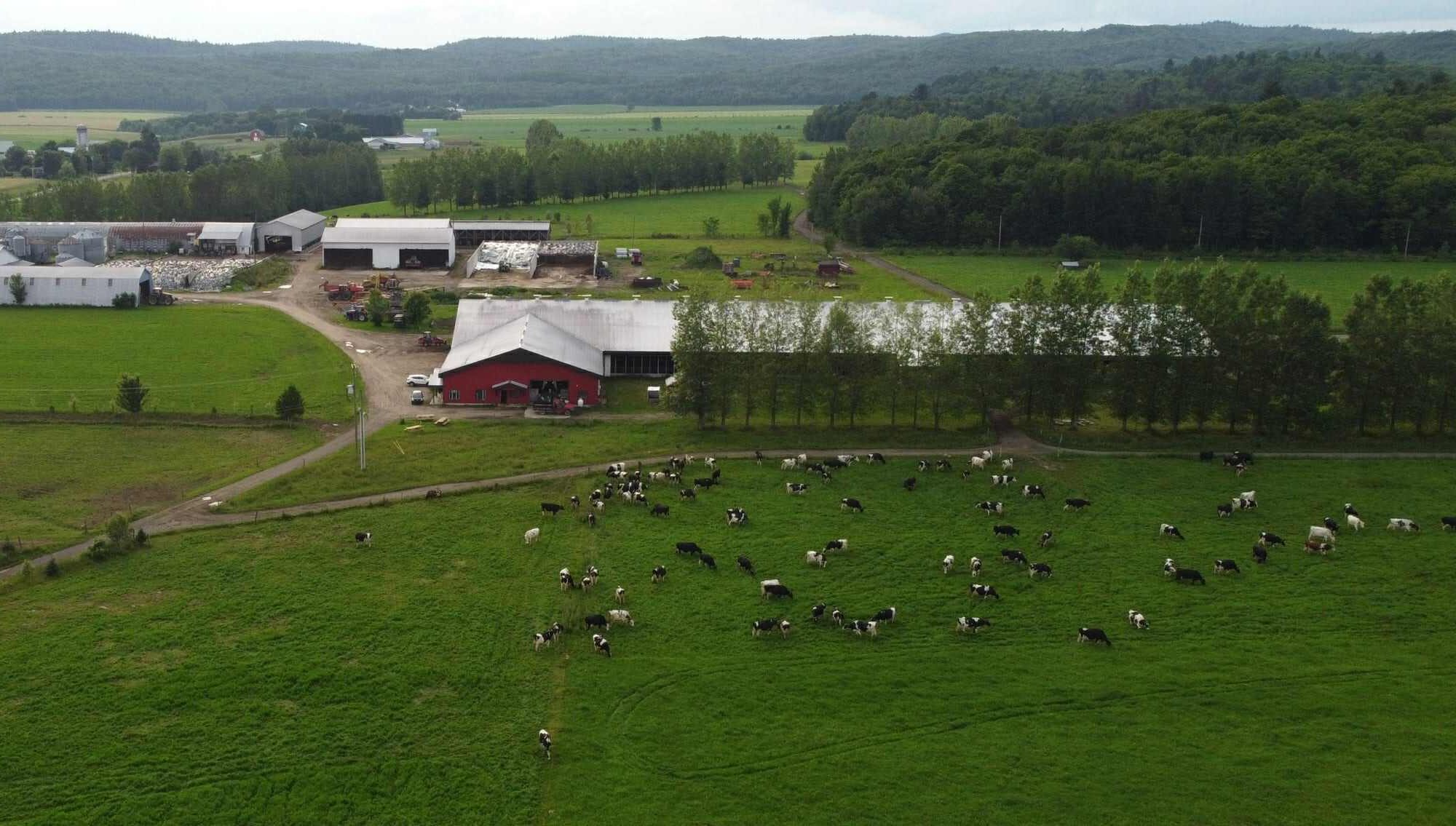
Established more than 150 years ago, Ferme Y. Lampron et Fils is an inspiring example of family farming and sustainable innovation.
Founded in 1858, the farm became certified organic in 1998 for its crops and in 2001 for its dairy production—making it a pioneer in Quebec’s organic dairy sector.
Today, five family co-owners manage:
- 449 ha under cultivation (including 113 ha rented)
- 40 ha of pasture, divided into 27 paddocks
- A herd of 200 milking cows and 140 replacement heifers
- A Boumatic 2×10 milking system and free-stall barn
- A seven-year crop rotation: hay – hay – hay – silage corn – soy – soy – rye
Feeding is carefully adapted to the seasons:
- In summer: cows receive a total mixed ration (TMR) during the day and graze at night, organized by group according to age and production.
- In winter: cows are fed exclusively with TMR.
Building Resilient Pastures Through Diversity
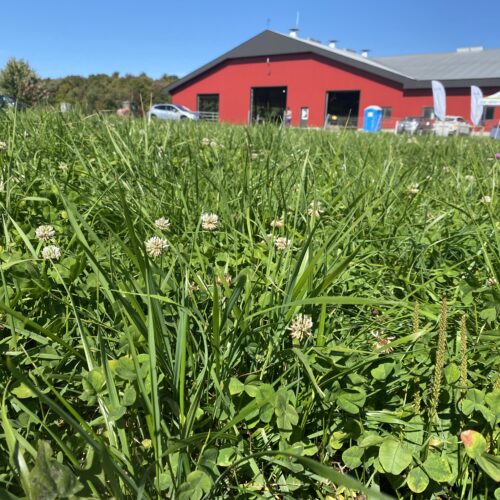
The diverse pastures at Ferme Y. Lampron et fils, made up of grasses and legumes, contribute to soil health, biodiversity, and forage system resilience. Their mix includes white clover, birdsfoot trefoil, smooth brome, meadow fescue, perennial ryegrass, and Kentucky bluegrass.
Some fields haven’t been ploughed for nearly a decade, yet they remain productive. Thanks to these diverse mixtures, the pastures are more resilient to extreme temperatures.
The farm’s objective: to maximize animal welfare and forage production despite limited grazing acreage.
They are experimenting with overseeding and have found that fallowing followed by pure seeding gives the best results so far.
The main challenge remains managing the limited land base, which restricts pasture renewal on a larger scale.
A Day of On-Farm Learning
The morning sessions combined research, technical expertise, and practical farmer experience, offering a well-rounded view of what effective pasture management can look like in practice.
Soil Health and Carbon
William Savard (Université Laval) presented preliminary findings from his study on soil health and carbon stocks across 20 organic dairy farms in Quebec. His findings suggest that soil texture, climate, and even the age of pastures influence carbon sequestration.
At Ferme Lampron, pastures established for 20 years appeared to store more carbon than those grazed for only 12 years.
Beyond carbon, other indicators, such as aggregate stability, available water capacity, and organic matter content, also showed strong positive results, confirming the many benefits of grazing for soil health.
Practical Tools for Grazing Management
François Labelle from Lactanet introduced two simple yet powerful tools for improving pasture management:
- The rising plate meter, which measures available forage biomass, and
- The Happy Grass app helps plan grazing rotations and adjust feed rations based on grass growth.
He also reminded participants that young grazed grass often contains more protein than silage, and that selecting diverse, palatable, and grazing-tolerant forage species is key to combining quality and productivity.
Diversity Drives Climate Resilience
Diverse forage mixtures make pastures more drought-resistant and ensure consistent availability even under challenging conditions.
Species such as orchardgrass, meadow brome, and meadow fescue recover quickly after stress and tolerate dry spells, contributing to long-term farm resilience.
Smart Fencing and Electrification: The Foundation of Good Management
Marie-Pier Beaulieu (Conseil québécois des plantes fourragères) highlighted a crucial but often overlooked element: reliable electric fencing systems.
A well-designed fence with proper grounding and a stable circuit is a true management tool, ensuring both animal safety and time efficiency.
She also emphasized the importance of reviving lost know-how around pasture electrification—a skill that faded with industrialization but remains essential today.
During her “Pasture Caravan” demonstration in the afternoon, participants discovered innovative technologies such as virtual fencing collars, which drew strong interest for their flexibility and adaptability.
The producer’s perspective
Producer Gabriel Lampron shared his experience with pasture planning, group organization based on production stage, and the importance of well-designed laneways and water points to facilitate movement.
He also highlighted the less visible benefits of grazing: beyond forage quality, grazing improves animal health, longevity, hoof condition, and soil health.
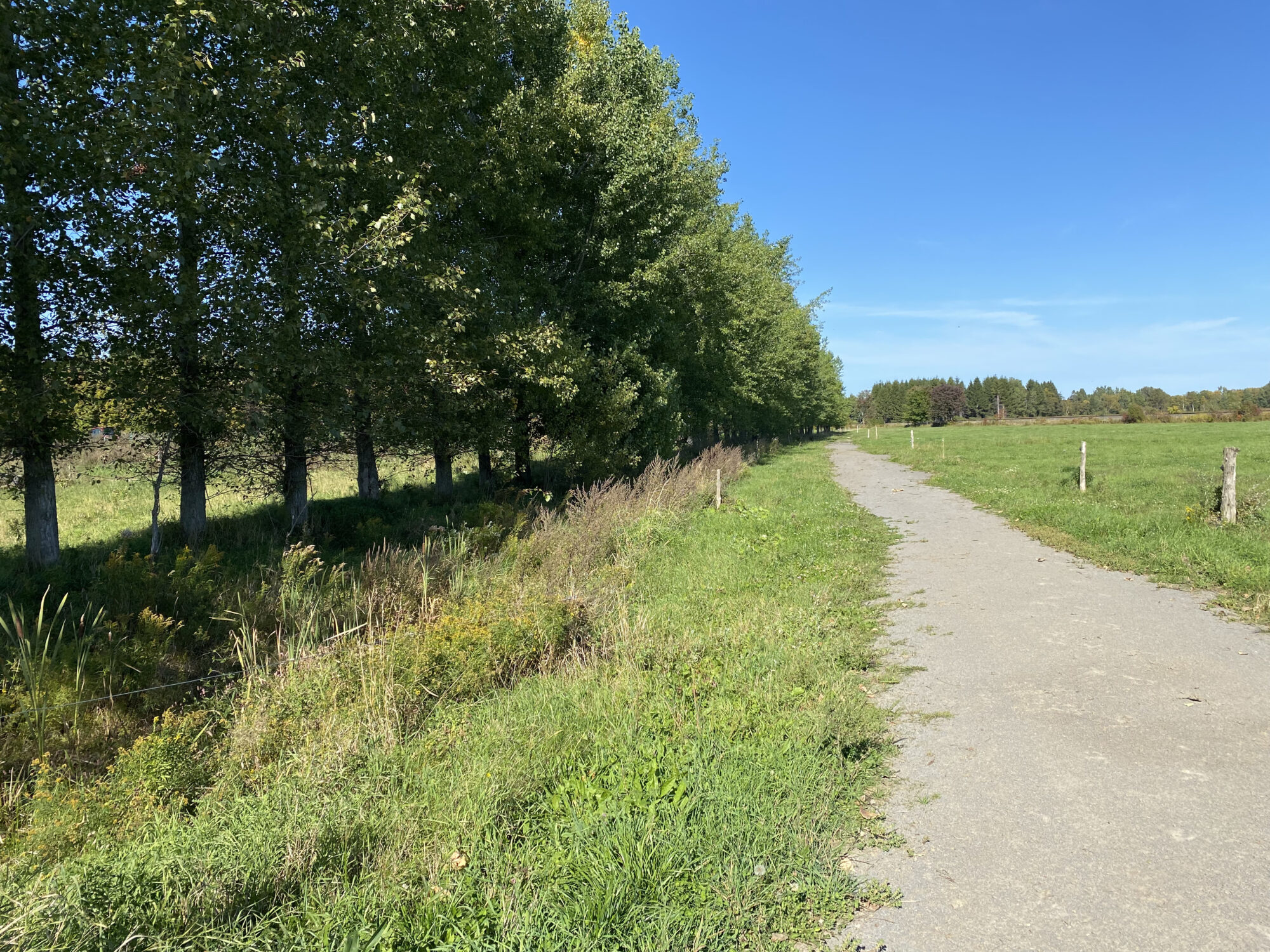
Ongoing improvements on his farm—such as installing hedgerows for shade, maintaining laneways, and using the rising plate meter for better ration balance—illustrate a long-term vision where profitability, resilience, and animal welfare advance hand in hand.
Together, these sessions provided participants not only tangible tools to try, but also a broader vision of what a well-managed grazing system can be: a practice that is productive, resilient and beneficial for the soil, animals and farmers themselves.
Touring the Farm’s Infrastructure
In the afternoon, participants observed:
- Agronomic practices: crop rotation, sowing, forage species, and herd management.
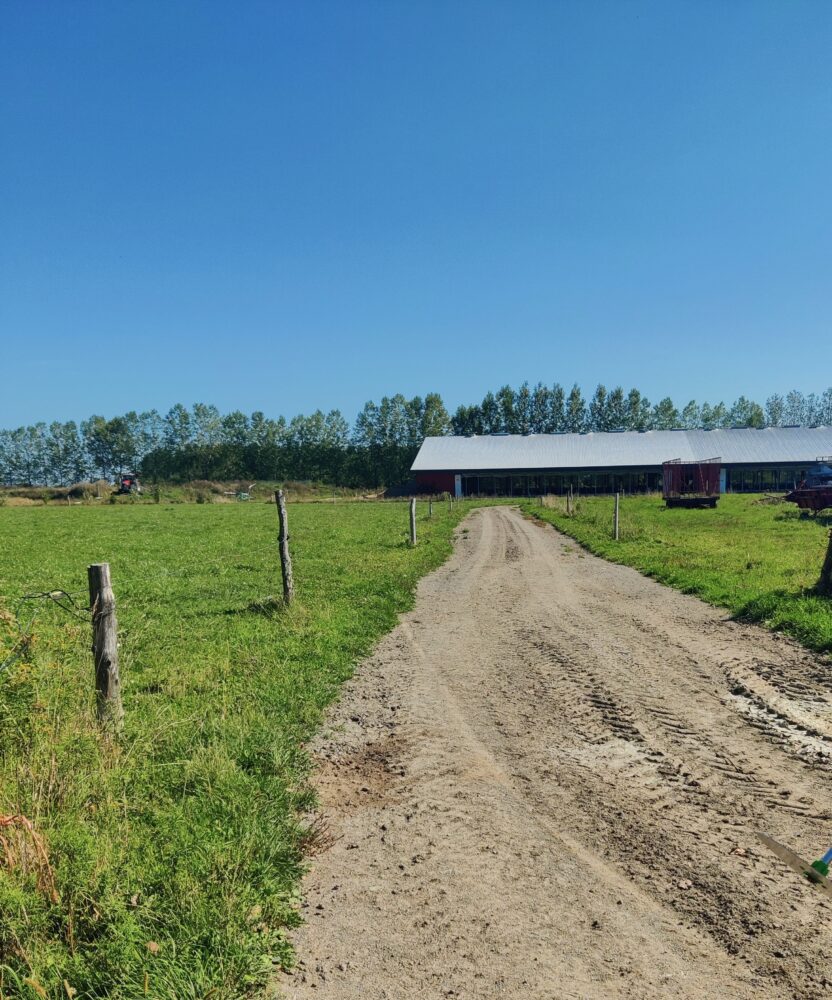
- Infrastructure: sustainable lime farm roads, water lines, drinking troughs, fences, windbreak hedgerows.
- Technologies tested on site: electrification systems, rising plate meter, and the Happy Grass app.
A Space for Discussion and Inspiration

Beyond the technical presentations and the farm tour, what stood out was the richness of the discussions. Several participants had traveled from far away to take part in this meeting, proof of the growing interest in grazing among dairy producers.
Everyone left with new ideas, practical tools, and inspiration to improve or integrate grazing on their own farms, contributing together to building a more regenerative agriculture.
Key Takeaways
- Soil health: Grazing improves soil health and carbon storage, though effects vary by soil texture, pasture age, and climate.
- Diverse pastures = resilience: Multi-species forage mixes boost drought resistance and long-term productivity.
- Animal welfare: Proper water access, shaded areas, and well-designed laneways reduce stress and support herd health.
- Practical tools: The rising plate meter and the Happy Grass app help with ration planning and pasture monitoring.
- Effective infrastructure: Reliable electric fencing and remote systems save time while ensuring animal safety.
In short, when well managed, pastures offer multiple benefits for soil health, water cycles, biodiversity, and animal welfare. But they also bring their share of challenges, which can be overcome with the right tools and practices.
Are you a dairy producer interested in discussing this practice with others?
Join our group of Quebec dairy farmers engaged in regenerative transition for more days of sharing!
📩 Contact us at [email protected].
Acknowledgments
This event is supported by Farmers for Climate Solutions and the FaRM Program. Please visit farmlearninghub.ca for free access to online courses, resources, and webinars; to find on-farm events in your region; and to learn more about ongoing research on implementing cover cropping, improved nitrogen management, and rotational grazing.
This project was funded by MAPAQ (le ministère de l’Agriculture, des Pêcheries et de l’Alimentation) under the Prime-Vert Program 2023-2026.